

Almost every week, someone walks into our Tustin showroom holding a vanity sample in one hand and the same question in their head: “Do I actually need a permit for this?”
It’s a fair question. Nobody wants to wait on a plan checker if they don’t have to. But nobody wants an inspector, a home buyer, or an insurance adjuster asking uncomfortable questions three years from now, either.
Here’s the honest answer from a team that has completed nearly 300 projects across 28 Orange County cities: whether you need a permit to remodel a bathroom depends on what you touch, not on how much you spend or how big the room is. Swap a mirror? No permit. Swap a shower valve? Permit. Move a toilet six inches? Definitely a permit.
This guide walks through every common task you might tackle when you remodel a bathroom, using the 2025 California Building Standards Code that took effect on January 1, 2026, plus the local rules we work with every month in cities like Irvine, Tustin, Laguna Hills, Mission Viejo, and Huntington Beach.
Quick Answer: In Orange County, you generally do not need a permit for painting, wallpaper, mirrors, countertop replacement, cabinet refacing, or swapping a faucet or toilet in the same spot. You do need a permit to remodel a bathroom when the work includes replacing or relocating a tub, shower, or sink; adding or changing electrical circuits, lights, or outlets; installing or replacing an exhaust fan; removing drywall in wet areas; moving walls or windows; or replacing a water heater. Your city’s building department issues the permit, or OC Development Services if you live in an unincorporated area.
Who Issues Bathroom Remodel Permits in Orange County?
Orange County isn’t one permitting office. It’s 34 incorporated cities plus a patchwork of unincorporated communities, and each one runs its own Building & Safety division.
- If you live inside city limits (Irvine, Anaheim, Costa Mesa, Newport Beach, Tustin, Lake Forest, and so on), your city’s building department reviews plans, issues the permit, and sends the inspectors.
- If you live in an unincorporated area such as Ladera Ranch, Rossmoor, Coto de Caza, Trabuco Canyon, or North Tustin, the County handles it. OC Development Services offers both over-the-counter and full plan check for private homes in those areas, and it lists interior remodels of kitchens and bathrooms among the projects that typically require a building permit.
Every jurisdiction starts from the same state code, but each city can adopt local amendments and publish its own handouts. That’s why your neighbor in Laguna Hills might hear something slightly different from your cousin in Fullerton. The City of Laguna Hills, for example, states plainly that a permit is required when you remove, replace, or relocate showers, tubs, or sinks, or alter the electrical or exhaust fan, while countertop replacement and cabinet refacing don’t need one.
Mars Brothers Pro Tip: Your mailing address can fool you. Plenty of homes with a “Tustin” or “Santa Ana” mailing address actually sit in unincorporated county territory. Before you submit anything, confirm your jurisdiction by parcel, not by ZIP code. Filing with the wrong office is one of the most common ways homeowners lose two weeks before the project even starts.

What Changed for Orange County Homeowners in 2026?
The 2025 California Building Standards Code Is Now in Effect
California updates Title 24, its building standards code, every three years. The newest edition took effect statewide on January 1, 2026, and any permit application submitted on or after that date has to comply with it. If you plan to remodel a bathroom this year, your plans will be reviewed under the 2025 codes, including the updated California Residential, Plumbing, Electrical, Mechanical, Energy, and CALGreen codes.
For most homeowners, the practical effect is simple: the details inspectors check (lighting efficacy, fan controls, water-conserving fixtures) are current, and your contractor should already be building to them.
The $1,000 “Handyperson” Rule — and Its Permit Catch
Starting in 2025, California raised the minor-work exemption from $500 to $1,000. Under the CSLB’s announcement of AB 2622, an unlicensed person can take on a small job under $1,000 only if no building permit is needed and they don’t hire any workers. If either condition fails, a licensed contractor is required.
That catch matters for bathrooms. The moment your project needs a permit, the “handyman special” route is off the table, no matter how small the price. The CSLB notes that unlicensed contracting can bring administrative fines of up to $15,000 and up to six months in jail.
Task-by-Task: Which Bathroom Renovation Jobs Need a Permit?
This is the heart of the guide. Before you remodel a bathroom, find each task on your wish list below. If even one of them lands in the “permit required” column, the whole project gets permitted.
Painting, Wallpaper, Mirrors, and Hardware — No Permit
New paint, wallpaper, a framed mirror, towel bars, robe hooks, and cabinet pulls are all cosmetic. You can remodel a bathroom’s look with these changes alone and never talk to the city.
Replacing Countertops or Refacing Vanity Cabinets — Usually No Permit
The California Residential Code (Section R105.2) exempts painting, papering, tiling, carpeting, cabinets, countertops, and similar finish work from permits. A new quartz top on your existing vanity, or new doors and drawer fronts on the same boxes, typically counts as finish work.
The exception: if the new vanity moves the sink drain, adds a second sink, or needs a new outlet, it’s no longer just finish work.
Swapping a Toilet, Faucet, or Sink in the Same Location — Usually No Permit
California’s plumbing code generally lets you remove and replace a fixture in the same location, as long as the job doesn’t require new or rearranged valves, pipes, or traps. A new toilet on the same flange or a new faucet on the same sink usually qualifies.
Where homeowners get tripped up is scope creep. Once you’re replacing corroded supply lines in the wall, changing a trap arm, or upgrading the shutoff valves, many cities consider that permitted plumbing work.
Retiling Floors or Walls — It Depends
Tile itself is finish work, so re-tiling a floor over a sound subfloor usually doesn’t need a permit. Shower walls are a different story. Removing shower tile almost always means removing the backer board and waterproofing behind it, and once you’re rebuilding a wet wall, you’re in permit territory in most OC cities. Some jurisdictions explicitly list drywall removal as a permit trigger.
Mars Brothers Pro Tip: “We’re only replacing the tile” is the sentence we hear most before discovering water damage behind the shower. When rot or a failed pan shows up mid-demo, the job instantly becomes permitted work. Budget for that possibility, and make sure your contractor’s agreement explains how a mid-project permit will be handled.
Replacing a Bathtub, Shower, or Shower Pan — Permit Required
Pulling out a tub or rebuilding a shower involves the drain, the valve, and the waterproofing system, which are exactly the parts inspectors want to see before they’re buried. Expect a plumbing inspection and, for site-built showers, a shower pan flood test before tile goes on. If you want to remodel a bathroom shower the right way, this inspection is your friend: it’s a free second set of eyes on the most leak-prone part of the room.
Tub-to-Shower Conversion or Moving Plumbing — Permit Required
Converting a tub to a walk-in shower, relocating a toilet, or turning one sink into two all require a permit, and often a simple floor plan. Common code points inspectors check include:
- A shower floor area of at least 1,024 square inches (it must fit a 30-inch circle)
- A shower door opening of at least 22 inches
- A shower drain of at least 2 inches in diameter
- A toilet centered at least 15 inches from any side wall, with 24 inches of clear space in front
New Lighting, Outlets, or Circuits — Permit Required
Any new outlet, light, heated floor, or circuit means an electrical permit. Expect inspectors to check:
- GFCI protection on all bathroom receptacles
- At least one dedicated 20-amp circuit for bathroom receptacles
- A receptacle within 3 feet of the outside edge of each sink basin
- Damp- or wet-rated fixtures over the tub or shower
- High-efficacy lighting, with at least one fixture on an occupancy or vacancy sensor
Installing or Replacing an Exhaust Fan — Permit Required
Bathroom ventilation is a mechanical item, and it’s one of the most commonly flagged details in OC inspections. Most cities expect an ENERGY STAR fan with humidity control adjustable between 50% and 80%, rated for at least 50 cfm intermittent (or 20 cfm continuous), ducted to the outside with a backdraft damper. An operable window doesn’t substitute for the fan in a bathroom with a tub or shower.
Removing Walls, Enlarging the Room, or Changing Windows — Permit and Plans Required
If you want to remodel a bathroom by taking space from a closet, moving a doorway, adding a window, or opening a wall, you’re changing framing and sometimes structure. These projects usually need drawings, and load-bearing changes may need an engineer. New glass near a tub or shower also has to be tempered where its bottom edge sits less than 60 inches above the standing surface.
Replacing the Water Heater During the Remodel — Permit Required
Water heaters are specifically carved out of most plumbing exemptions. Even a like-for-like replacement needs a permit because of venting, seismic strapping, and pressure-relief requirements.
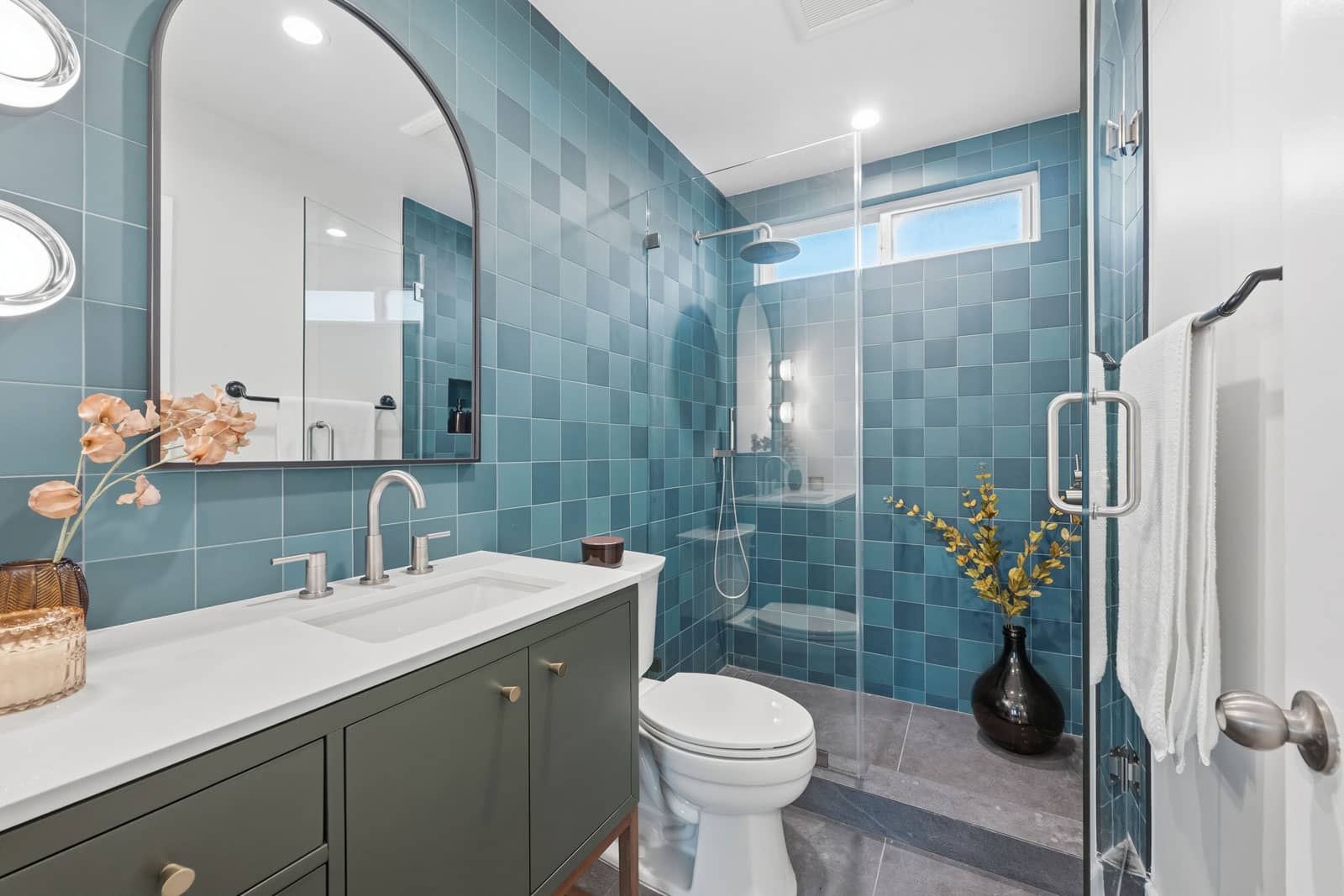
Quick-Reference Table: Bathroom Remodel Permit Requirements by Task
Task | Permit Needed in Most OC Cities? |
Painting, wallpaper, mirrors, hardware | No |
New countertop or cabinet refacing | No |
Toilet, faucet, or sink swap (same location, no pipe changes) | Usually no |
Re-tiling a floor over sound subfloor | Usually no |
Re-tiling shower walls (backer board removed) | Usually yes |
Replacing a tub, shower, or shower pan | Yes |
Tub-to-shower conversion or moving any fixture | Yes |
New lights, outlets, circuits, or heated floors | Yes |
New or replacement exhaust fan | Yes |
Moving walls, doors, or windows | Yes, with plans |
Water heater replacement | Yes |
Code Requirements OC Inspectors Check During a Bathroom Remodel
Beyond the task-specific items above, three requirements catch Orange County homeowners by surprise when they remodel a bathroom.
Water-Conserving Plumbing Fixtures (Civil Code 1101.4)
If your home was built before 1994, California Civil Code Section 1101.4 requires that a permitted alteration triggers replacement of noncompliant plumbing fixtures with water-conserving ones throughout the single-family home, not only in the bathroom you’re remodeling. Most cities ask you to sign a self-certification form before they’ll final the permit. Current targets look like this:
Fixture | Required Maximum Flow |
Toilet | 1.28 gallons per flush |
Showerhead | 1.8 gallons per minute at 80 psi |
Bathroom faucet | 1.2 gallons per minute at 60 psi |
So that 1985 toilet in the hall bath may need to go even if you’re only working on the primary suite.
Smoke and Carbon Monoxide Alarm Retrofits
Under California Residential Code Sections R314 and R315, when a permitted alteration exceeds $1,000 in valuation, the house must have working smoke alarms and, in homes with gas appliances or an attached garage, carbon monoxide alarms in the required locations. Since nearly every project that needs a permit to remodel a bathroom exceeds $1,000, plan on this check at final inspection.
Tempered Glass and Wet-Area Finishes
Shower and tub walls need a smooth, nonabsorbent finish at least 6 feet above the floor, and glass enclosures must be tempered and permanently labeled as such. Frameless glass from a reputable supplier will carry the etched mark; salvaged glass usually won’t.

How Much Do Bathroom Remodel Permits Cost in Orange County in 2026?
Permit fees in Orange County are mostly valuation-based, meaning the city calculates them from the declared cost of the work, then adds plan check, technology, and state fees. That’s why two homeowners who remodel a bathroom in different cities can pay noticeably different amounts for similar work.
Here are the approximate 2026 ranges we see across our Orange County projects:
Project Type | Typical Total Permit Fees (2026) |
Cosmetic refresh (paint, mirrors, countertop) | $0 |
Same-layout fixture and electrical update | $350 – $900 |
Full gut remodel, same layout | $700 – $1,800 |
Layout change, wall moves, or plans with plan check | $1,500 – $3,500+ |
These ranges are estimates for planning purposes and are refreshed annually. Your city’s current fee schedule always governs.
Mars Brothers Pro Tip: Permit fees are usually 2% to 5% of a typical bathroom project budget. Skipping them to save money is like skipping a home inspection to save on a house purchase. The cost is small, and the protection is real.
The Bathroom Remodel Permit Process, Step by Step
If you’ve never pulled a permit to remodel a bathroom, the process is more predictable than most people expect.
- Define your scope. List every task, from demo to the last outlet cover. This determines whether you need a building, plumbing, electrical, or mechanical permit, or a combination.
- Get HOA approval first, if applicable. Many Irvine, Mission Viejo, and Ladera Ranch associations require architectural review before work starts, and that approval is separate from the city’s.
- Prepare drawings. A same-layout remodel often needs only a simple floor plan and fixture list. Moving walls or windows may need full plans.
- Submit through the online portal. Most OC cities and the County accept digital submittals. Simple scopes often qualify for over-the-counter review in days; plan-check projects commonly take two to four weeks.
- Post the permit and schedule inspections. Typical inspections include rough plumbing, rough electrical and mechanical, the shower pan test, drywall or lath, and final.
- Close out at final. Sign the water-fixture and smoke/CO alarm certifications, pass final inspection, and keep the signed-off permit card with your home records.
From permit application to final sign-off, a same-layout remodel usually runs four to eight weeks, depending heavily on the city and inspector availability.
What Happens If You Remodel a Bathroom Without a Permit?
We get calls every year from homeowners who chose to remodel a bathroom without a permit and later needed one. Here’s what usually happens:
- Stop-work orders and extra fees. If a city discovers unpermitted work, it can issue a stop-work notice and charge investigation fees on top of the normal permit cost.
- Opened walls. To legalize finished work, inspectors may require you to remove tile or drywall so they can see plumbing and wiring.
- Resale problems. California sellers must disclose known alterations made without permits. Buyers and their lenders notice, and it can cost you leverage at the negotiating table.
- Insurance headaches. If a hidden leak or electrical fault causes damage, unpermitted work can complicate a claim.
- Contractor accountability. If someone offers to remodel a bathroom “no permit, cash only,” they’re often unlicensed or cutting corners elsewhere.
The cheapest time to remodel a bathroom legally is the first time.
Special Situations: HOAs, Condos, and Older Orange County Homes
Condos and Townhomes
If you remodel a bathroom in a condo or townhome, the HOA often controls more than the city. Expect rules about work hours, elevator use, sound underlayment under tile, and who can touch shared plumbing stacks. Some associations require proof of the contractor’s insurance before a crew sets foot on the property.
Homes Built Before 1978
Many Orange County tract homes from the 1950s through the 1970s, especially in Huntington Beach, Garden Grove, Fountain Valley, and Westminster, may contain lead-based paint. Under the EPA’s Renovation, Repair and Painting Program, anyone paid to disturb painted surfaces in a pre-1978 home must be lead-safe certified and follow lead-safe work practices. If you plan to remodel a bathroom in an older home, ask for the contractor’s EPA firm certification before demolition day.
Homes Built Before 1994
As covered above, these homes trigger the whole-house water-conserving fixture requirement once a permit is pulled. It’s worth getting a quick count of every toilet, showerhead, and faucet before you budget.
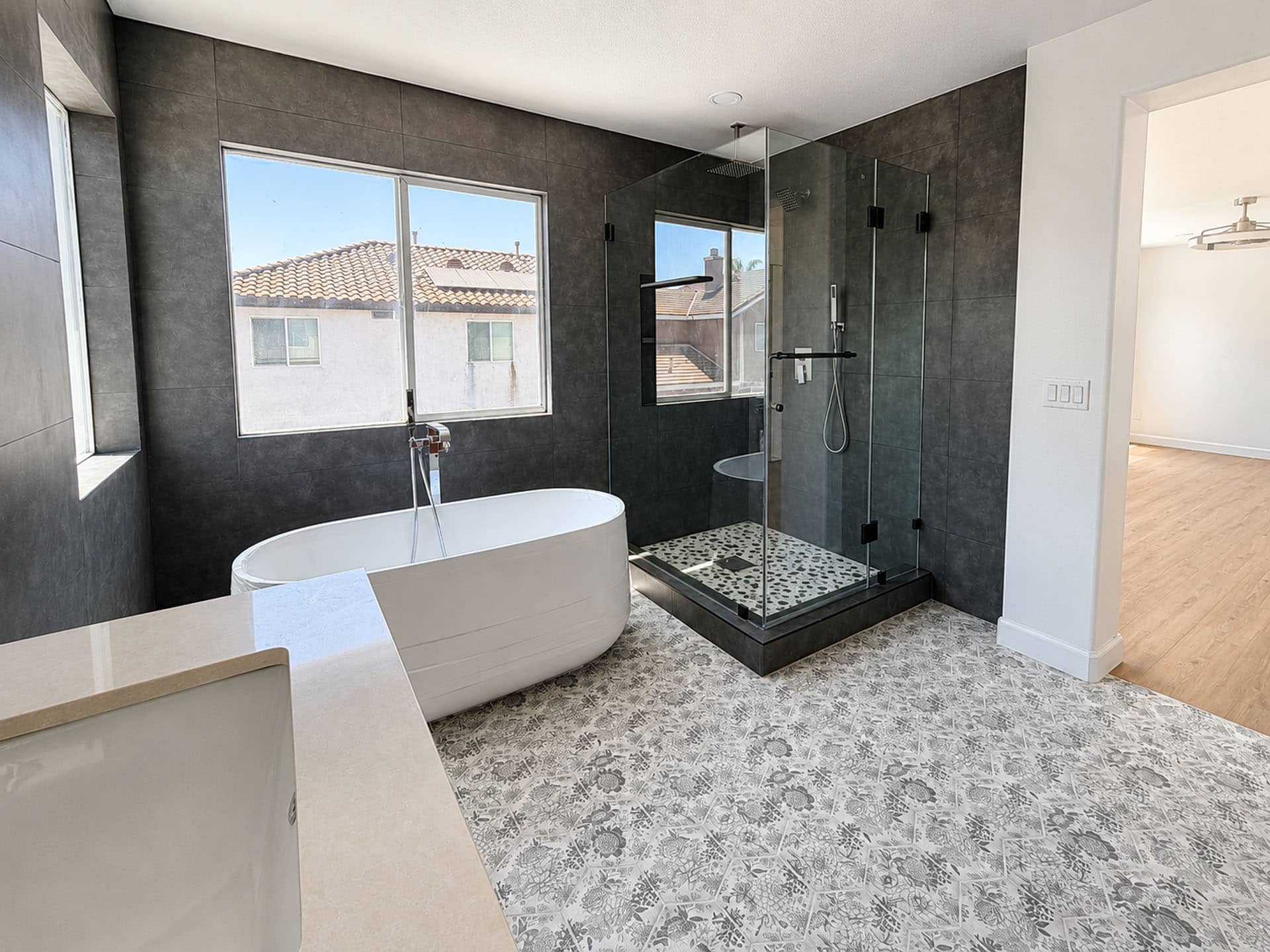
How Mars Brothers Kitchen & Bath Handles Your Bathroom Permit
When you remodel a bathroom with us, permitting isn’t a separate chore we hand back to you. Our team:
- Confirms your jurisdiction (city or county) by parcel before design starts
- Prepares the floor plan and scope documents your building department requires
- Submits the application and tracks plan check
- Coordinates every inspection, from rough plumbing and shower pan test to final
- Handles the water-fixture and smoke/CO certifications so nothing stalls at the finish line
You’ll also see every vanity, tile, and fixture in person at our Tustin showroom, so the products on your permit match the products you love. Browse finished work in our project portfolio, explore our bathroom remodeling services, or review financing options before you plan to remodel a bathroom this season.
Frequently Asked Questions About Bathroom Remodel Permits in Orange County
Can I remodel a bathroom myself without a permit in Orange County?
You can handle cosmetic work like painting, mirrors, hardware, and countertop or cabinet refacing yourself without a permit. Homeowners can also pull an owner-builder permit for permitted work, but you’re then responsible for code compliance and inspections, and you can’t legally hire unlicensed workers to help. Plumbing, electrical, and exhaust fan work still require a permit regardless of who does it.
Do I need a permit to replace a bathroom vanity in Orange County?
Usually not, if the new vanity uses the same sink drain and supply location and doesn’t require new outlets or wiring. Cabinets and countertops are treated as finish work under the California Residential Code. If you move the sink, add a second sink, or add electrical, you’ll need a permit.
How long does it take to get a bathroom remodel permit in Orange County?
Simple same-layout scopes often qualify for over-the-counter or express review and can be issued within a few days to a week. Projects that move walls, plumbing, or windows usually go through plan check, which commonly takes two to four weeks, depending on the city’s workload.
Who is responsible for pulling the permit, the homeowner or the contractor?
Either can, but in practice your licensed contractor should pull it. When the contractor is the permit holder, they’re accountable to the city for code compliance and inspections. Be cautious if a contractor asks you to pull an owner-builder permit for work they’re performing; that can shift liability onto you.
Will unpermitted bathroom work affect selling my home in California?
It can. California sellers must disclose known alterations made without permits, and buyers’ inspectors frequently spot newer bathrooms with no permit history. That can lead to price reductions, requests to legalize the work before closing, or a buyer walking away. Permitting the work up front is far cheaper than fixing it at escrow.
Ready to Remodel a Bathroom the Right Way?
Whether you’re picturing a quick vanity swap or a full primary suite with a curbless shower, Mars Brothers Kitchen & Bath will tell you exactly which permits your project needs, and handle them for you.
📍 Showroom: 1451 Edinger Ave, Suite B, Tustin, CA 92780 📞 Call: (949) 503-0999 🌐 Website: marsbrokitchenbath.com 📸 Instagram: @marsbrotherskitchenbath