
Walk into any small kitchen and you’ll immediately feel what designers have known for decades: color is one of the most powerful tools you have. The right kitchen cabinet colors can visually expand a cramped space, lift a low ceiling, and transform a tight galley into something that feels open, airy, and welcoming. The wrong colors can do the exact opposite, closing in the walls and making an already compact kitchen feel like a storage closet.
At Mars Brothers Kitchen & Bath, we’ve helped hundreds of homeowners navigate the overwhelming world of cabinet color selection. And the question we get asked more than almost any other is: What kitchen cabinet colors will make my small kitchen look bigger?
In this guide, we’re giving you the full answer, backed by color theory, design science, and years of hands-on experience in kitchen remodeling. Whether you’re doing a full cabinet replacement, a paint refresh, or exploring kitchen cabinet color ideas for a future renovation, this is everything you need to make a confident, informed decision.
Why Kitchen Cabinet Colors Matter More in a Small Kitchen
In a large kitchen, color is mostly about aesthetics. In a small kitchen, color is a functional design tool. The hues you choose for your cabinets affect how much light bounces around the room, how far the eye travels before it hits a visual barrier, and ultimately how spacious, or cramped, the space feels to anyone standing in it.
This isn’t just interior design intuition. According to research published by the National Institute of Standards and Technology (NIST), the reflectance value of a surface, how much light it bounces back versus absorbs, directly impacts perceived spatial volume. Dark, matte surfaces absorb light and make surfaces feel closer. Light, reflective surfaces bounce light outward and make surfaces feel farther away. Applied to kitchen cabinet colors, this principle is everything.
Beyond reflectance, color also affects mood, perceived cleanliness, and even appetite, all of which matter in a kitchen. The goal in a small kitchen isn’t just to create the illusion of space; it’s to select kitchen cabinet colors that make the room function better and feel better every single day.
The Psychology of Color in Kitchen Cabinet Design
Color psychology plays a surprisingly practical role in kitchen cabinet color ideas for small spaces. Cool colors, blues, greens, and soft grays, tend to recede visually, making walls feel farther away. Warm neutrals, creams, soft whites, and warm greiges, create a welcoming, expansive glow. Deep, saturated colors create intimacy and drama, which can be beautiful in the right context but counterproductive in an already compact kitchen.
Understanding these principles helps you choose cabinet colors not just by what you love in isolation, but by what will actually serve your space.

The Best Kitchen Cabinet Colors to Make a Small Kitchen Feel Bigger
1. Crisp White: The Classic Space-Expanding Kitchen Cabinet Color
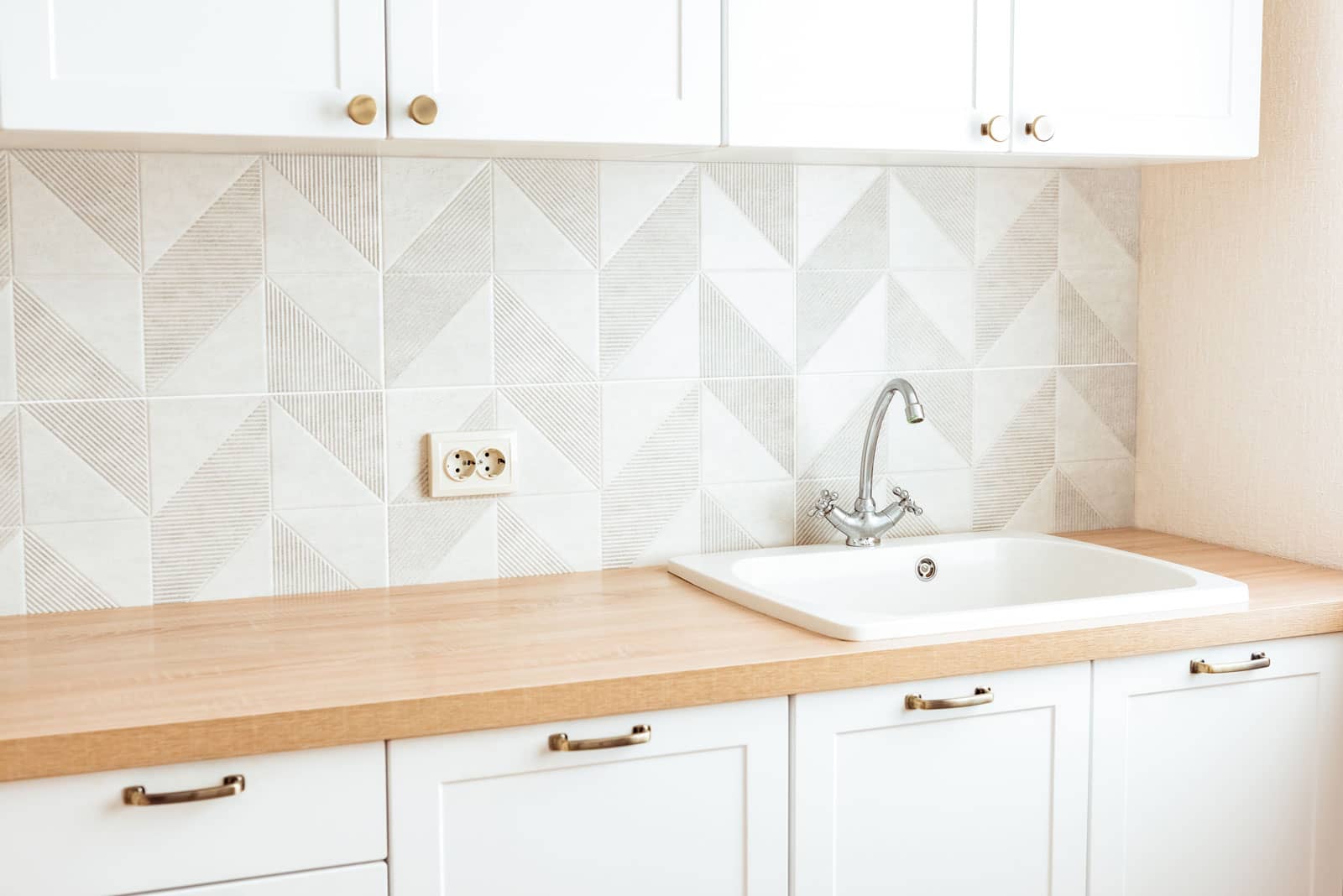
White kitchen cabinets are the gold standard for small kitchen design, and for good reason. White reflects the maximum amount of light, creates a seamless visual flow, and removes the color contrast that typically makes walls feel like boundaries. When your cabinets, walls, and trim are all in the same white family, the room reads as one continuous, open space rather than a series of separate surfaces competing for attention.
But not all whites are created equal. For small kitchens, the best white kitchen cabinet colors are:
- Pure/bright white (e.g., Benjamin Moore Chantilly Lace, Sherwin-Williams Extra White), maximum reflectance, clean and modern
- Warm white (e.g., Benjamin Moore White Dove, Sherwin-Williams Alabaster), softer, creamier, avoids the sterile look
- Off-white/linen (e.g., Benjamin Moore Simply White, Sherwin-Williams Shoji White), warm undertones that work beautifully with wood accents and natural stone
The key with white cabinet colors is pairing them with the right countertop and backsplash. Light quartz or marble countertops, a white or light gray subway tile backsplash, and stainless steel or matte white hardware all reinforce the open, airy feel. Avoid heavy contrasts, a stark white cabinet against a very dark countertop creates a visual “chop” that actually shrinks the perceived space.
2. Soft Gray: The Modern Alternative to White Kitchen Cabinets
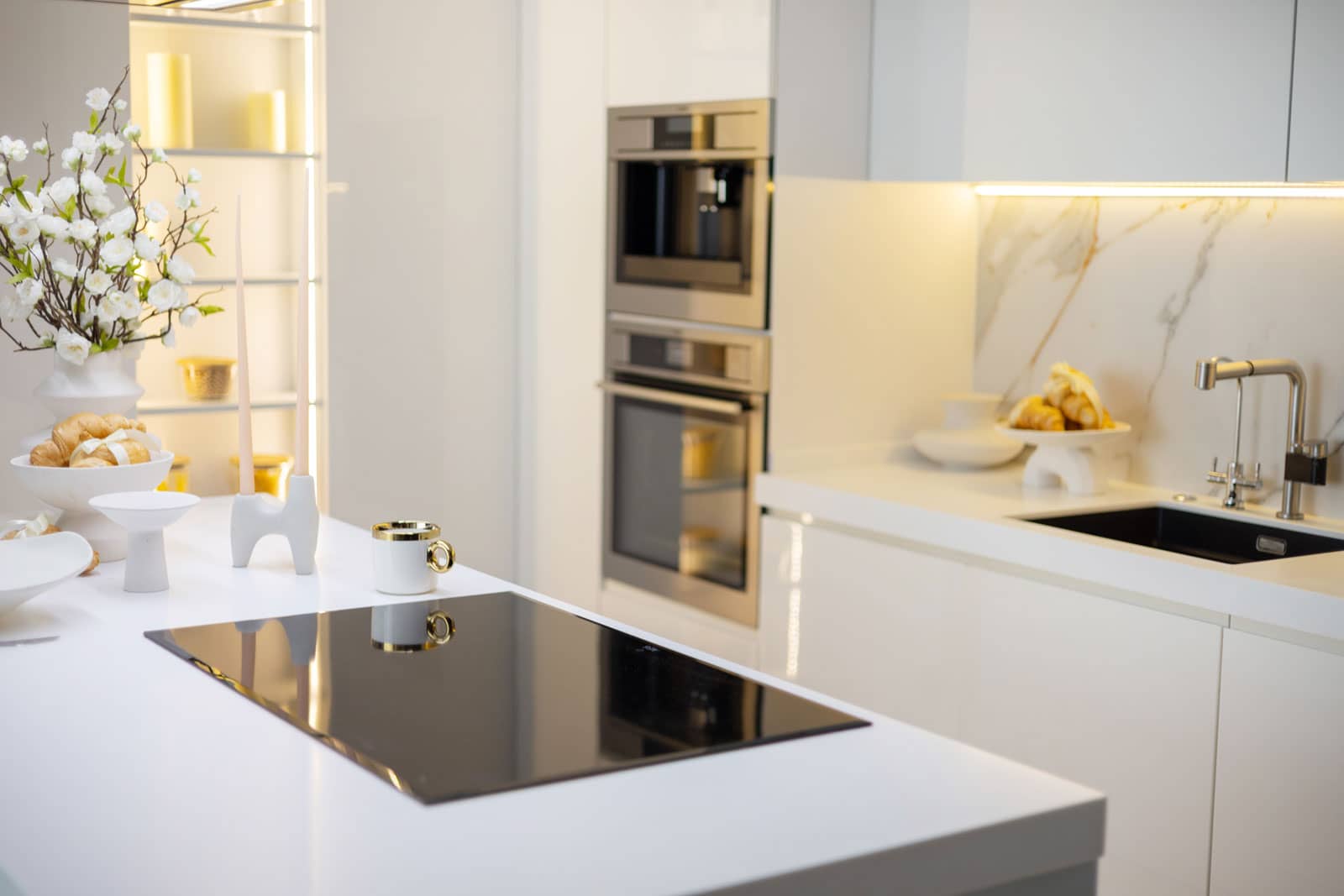
Soft gray kitchen cabinet colors have become one of the most popular choices in contemporary kitchen design, and they’re particularly effective in small kitchens. The right gray, cool-toned and light-valued, reflects nearly as much light as white while adding sophistication and depth that pure white can lack.
The best gray kitchen cabinet colors for small spaces include:
- Light cool gray (e.g., Sherwin-Williams Repose Gray, Benjamin Moore Gray Owl), versatile, modern, pairs with virtually any countertop
- Greige (gray-beige blend, e.g., Sherwin-Williams Agreeable Gray), warmer than gray, cooler than beige, incredibly livable
- Pale blue-gray (e.g., Benjamin Moore Sea Salt, Sherwin-Williams Misty), adds a subtle, calming color note without sacrificing brightness
Gray cabinet colors work especially well in kitchens with stainless steel appliances, quartz countertops, and chrome or brushed nickel hardware. They also photograph beautifully, a practical consideration for homeowners thinking about resale value.
3. Soft Blue and Sage Green: The Color Trend Redefining Small Kitchen Cabinets
One of the most exciting developments in kitchen cabinet color ideas over the past several years is the rise of muted, nature-inspired hues, particularly soft blues and sage greens. Far from making a kitchen feel darker, the right shade of these colors actually creates an expansive, serene quality reminiscent of open sky and natural landscapes.
The most effective soft blue and green kitchen cabinet colors for small spaces are:
- Pale powder blue (e.g., Farrow & Ball Lulworth Blue, Benjamin Moore Boothbay Gray), whisper-soft, airy, works beautifully with white walls and brass hardware
- Dusty sage green (e.g., Sherwin-Williams Pewter Green, Benjamin Moore Aganthus Green), organic, sophisticated, pairs well with warm wood tones and unlacquered brass
- Seafoam and mint (e.g., Farrow & Ball Mizzle, Benjamin Moore Palladian Blue), lighter, brighter, excellent for kitchens with limited natural light
Mars Brothers Kitchen & Bath Design Note: When using colored kitchen cabinet colors in a small space, keep the upper cabinets lighter than the lower cabinets, or use the color only on lower cabinets and keep uppers white. This “two-tone” approach grounds the space visually without closing it in.
4. Warm Cream and Greige: The Timeless Kitchen Cabinet Colors for Cozy Small Kitchens
Not every homeowner wants a cool, minimal aesthetic. For those who prefer a warmer, more traditional feel, cream and greige kitchen cabinet colors are the answer. These warm neutral tones add depth and character while still reflecting enough light to keep a small kitchen feeling open.
Top warm neutral kitchen cabinet colors for small spaces:
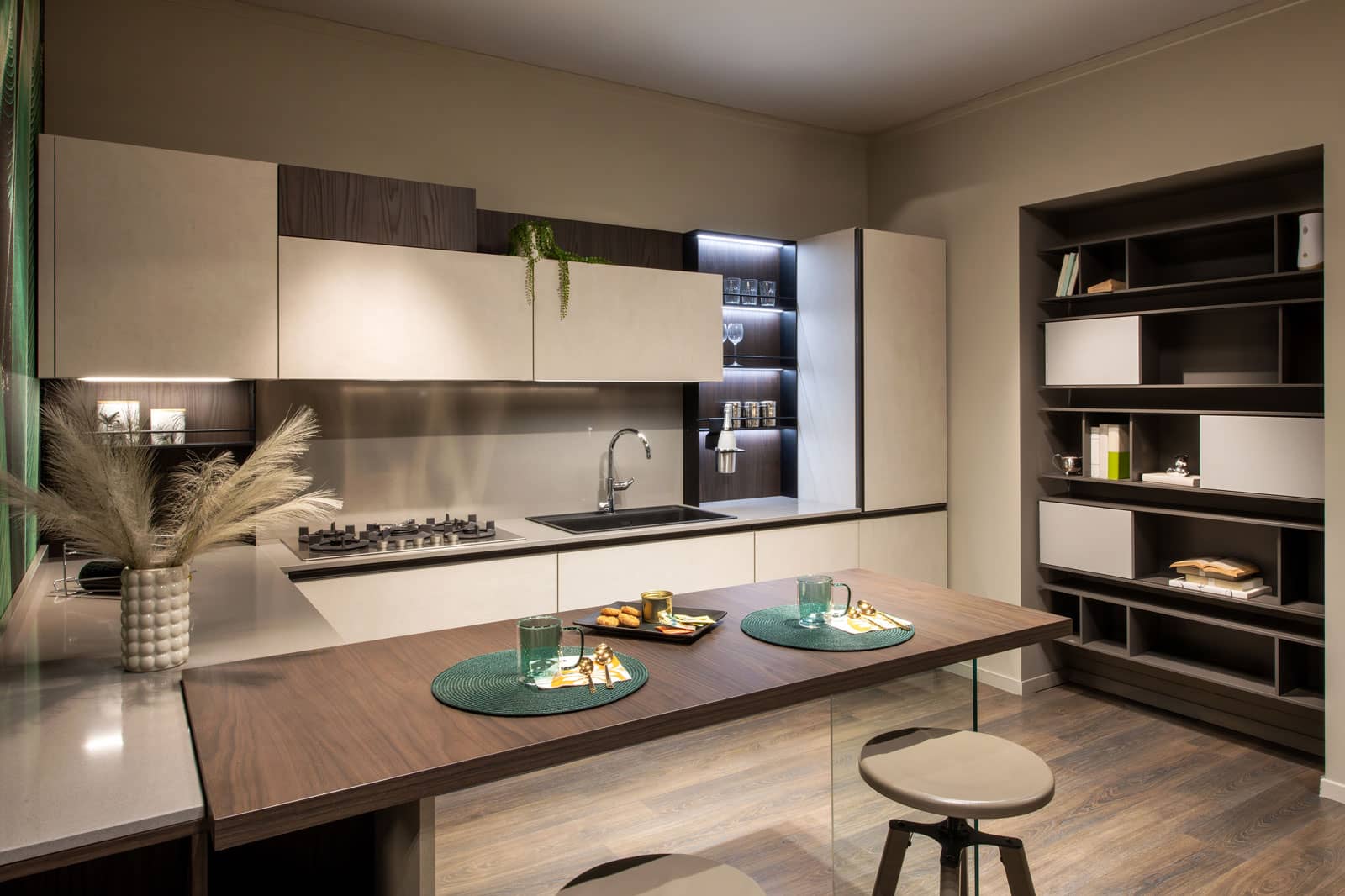
- Warm cream (e.g., Benjamin Moore Pale Oak, Sherwin-Williams Accessible Beige), soft, welcoming, pairs beautifully with butcher block or walnut countertops
- Greige (e.g., Sherwin-Williams Agreeable Gray, Benjamin Moore Revere Pewter), the perfect middle ground between gray and beige
- Antique white (e.g., Sherwin-Williams Antique White, Benjamin Moore White Heron), warmer than bright white, timeless appeal
Warm kitchen cabinet colors work best when paired with warm-toned lighting (2700K–3000K bulbs), natural wood accents, and warm metal hardware like unlacquered brass or bronze.
5. Two-Tone Kitchen Cabinet Colors: A Smart Strategy for Small Kitchens
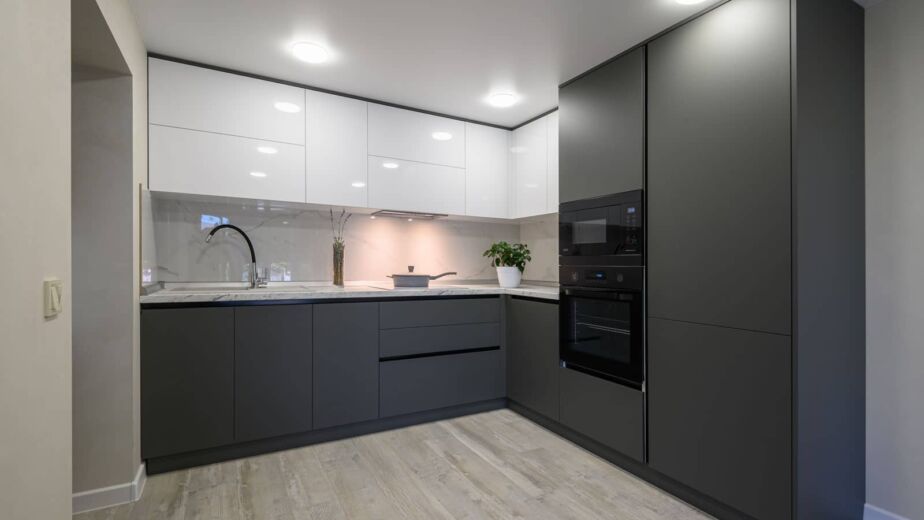
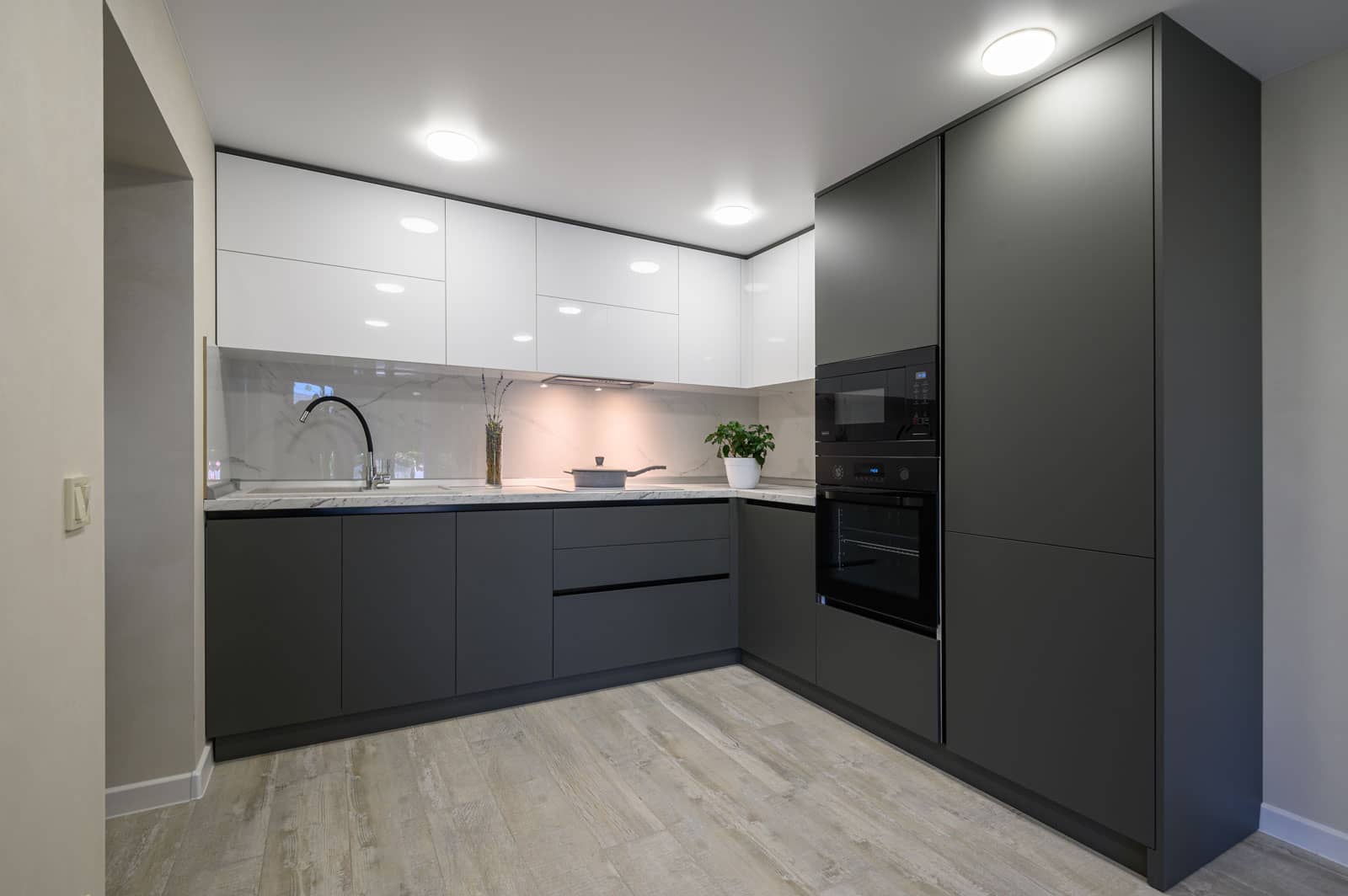
Two-tone cabinetry, using one color for upper cabinets and a different (usually darker) color for lower cabinets, is one of the most effective kitchen cabinet color ideas for small kitchens because it creates visual interest without sacrificing the lightness the space needs.
The logic is grounded in design physics: keeping upper cabinets light draws the eye upward, making the ceiling feel higher and the room feel taller. A contrasting lower cabinet color grounds the space and gives it visual weight without overwhelming it. The result feels intentional, layered, and sophisticated, nothing like the cramped, one-note kitchens most people are trying to escape.
Popular two-tone kitchen cabinet color combinations for small kitchens:
- White uppers + navy lowers, classic, bold, timeless
- White uppers + sage green lowers, fresh, organic, trending strongly
- Light gray uppers + charcoal lowers, sleek, modern, monochromatic
- Cream uppers + warm greige lowers, soft, layered, traditional
- White uppers + black lowers, high contrast, dramatic, works best with lots of natural light
Kitchen Cabinet Colors to Avoid in a Small Kitchen
Understanding which kitchen cabinet colors expand a small space is only half the equation. Equally important is knowing which colors to avoid, or at least use very carefully.
Very Dark Colors on All Cabinets
Deep navy, charcoal, forest green, and black kitchen cabinet colors are dramatic and beautiful, but they’re best reserved for kitchens with generous natural light or generous square footage. In a small, low-light kitchen, dark cabinet colors on every surface absorb light, advance the walls, and create a tunnel-like feeling that no amount of clever organization can overcome.
If you love dark kitchen cabinet colors, use them strategically: on lower cabinets only, on an island, or as an accent on a single feature wall. Never floor-to-ceiling dark in a small kitchen unless you have exceptional natural light.
High-Contrast Color Combinations
A common mistake in small kitchen cabinet color selection is choosing combinations with very high visual contrast, think bright white cabinets against jet-black countertops, or two dramatically different cabinet colors that fight for attention. High contrast chops up the visual field, creating multiple focal points that make the eye bounce around and the room feel fragmented and small.
In small kitchens, aim for low-to-medium contrast combinations: tonal pairings where colors are in the same family and similar value range, differentiated by subtle undertone rather than dramatic value shifts.
Highly Saturated, Vivid Colors
Bold, saturated kitchen cabinet colors, fire engine red, cobalt blue, electric yellow, have their place in design but rarely serve small kitchens well. Highly saturated colors dominate the visual field, drawing attention to surfaces rather than away from them. They make cabinets feel like walls closing in rather than surfaces receding into the background.
If you want color personality in a small kitchen, reach for muted, desaturated versions of your favorite hues, dusty rose instead of hot pink, slate blue instead of cobalt, olive instead of lime. These deliver personality without the spatial penalty.
How Finish Affects the Performance of Kitchen Cabinet Colors
The color you choose is only part of the equation, the finish on your kitchen cabinets plays an equally important role in how that color performs in a small space.
High-Gloss Finish: Maximum Light Reflection
High-gloss cabinet finishes reflect the most light of any finish type, amplifying the space-expanding effect of light kitchen cabinet colors. A bright white high-gloss cabinet essentially acts as a mirror, bouncing light around the room and making the space feel significantly larger. The tradeoff? High-gloss finishes show fingerprints, smudges, and surface imperfections more readily than matte alternatives.
Satin and Semi-Gloss Finish: The Best of Both Worlds
For most small kitchens, a satin or semi-gloss finish is the sweet spot. These finishes offer good light reflectance, notably better than matte, while being far more forgiving in terms of everyday wear, cleaning ease, and imperfection concealment. Most professional kitchen cabinet painters and manufacturers default to a satin or semi-gloss finish for exactly this reason.
Matte Finish: Beautiful but Use Carefully
Matte kitchen cabinet finishes are on-trend and undeniably sophisticated, but they absorb more light than any other finish type. In a small kitchen with good natural light, a matte finish on light-colored cabinets can look stunning. In a darker or smaller kitchen, matte finishes can work against you by reducing the very reflectance that makes light cabinet colors so effective.
Pro Tip from Mars Brothers Kitchen & Bath: If you love the look of matte but have a small kitchen, consider a matte finish on lower cabinets only, and use a satin or semi-gloss on upper cabinets where light reflectance matters most.
How Lighting Interacts With Kitchen Cabinet Colors
No discussion of kitchen cabinet colors for small spaces is complete without talking about lighting, because the same cabinet color can look completely different depending on the light source illuminating it.
Natural Light Direction and Cabinet Color Selection
North-facing kitchens receive cool, indirect light all day. In these kitchens, cool gray and blue cabinet colors can feel cold and dim, lean toward warm whites and creams to counterbalance. South-facing kitchens receive warm, direct light for much of the day, making them more forgiving of cool-toned cabinet colors. East- and west-facing kitchens shift dramatically through the day, making warm neutrals and greiges the safest choice since they read well in both warm and cool light.
Artificial Lighting and Kitchen Cabinet Color Accuracy
The color temperature of your kitchen’s artificial lighting has a profound effect on how cabinet colors appear. According to the U.S. Department of Energy, LED lighting is the most energy-efficient choice for kitchens, but the color temperature you choose matters enormously for how your cabinet colors render.
- Warm white LEDs (2700K–3000K): Enhance warm cabinet colors (cream, greige, warm white); make cool grays and blues look greenish or dull
- Neutral white LEDs (3500K–4000K): The most accurate for true color rendering; work well with most kitchen cabinet colors
- Cool white LEDs (5000K+): Make cool-toned cabinets look crisp and clean; can make warm cabinet colors look washed out or yellowish
Always test paint samples under your actual kitchen lighting, both natural and artificial, before committing. What looks perfect in a paint store can look entirely different in your kitchen.
Under-Cabinet Lighting to Enhance Cabinet Color
Under-cabinet LED strip lighting is one of the most cost-effective upgrades you can make to any small kitchen, and it directly amplifies the effect of your kitchen cabinet colors. By washing light down over countertops, under-cabinet lighting creates a glowing base plane that makes the room feel larger and highlights the beauty of your cabinet color choice. Warm under-cabinet lighting (2700K–3000K) is usually the most flattering for residential kitchens.
Coordinating Kitchen Cabinet Colors With Countertops, Backsplash, and Hardware
Great kitchen cabinet colors don’t exist in isolation, they succeed or fail based on how well they coordinate with the rest of the kitchen’s palette.
Cabinet Colors and Countertop Pairings
- White cabinets: Pair with white or light gray quartz, Carrara marble, warm butcher block, or light concrete for a cohesive, airy look. Avoid very dark countertops unless you have strong natural light.
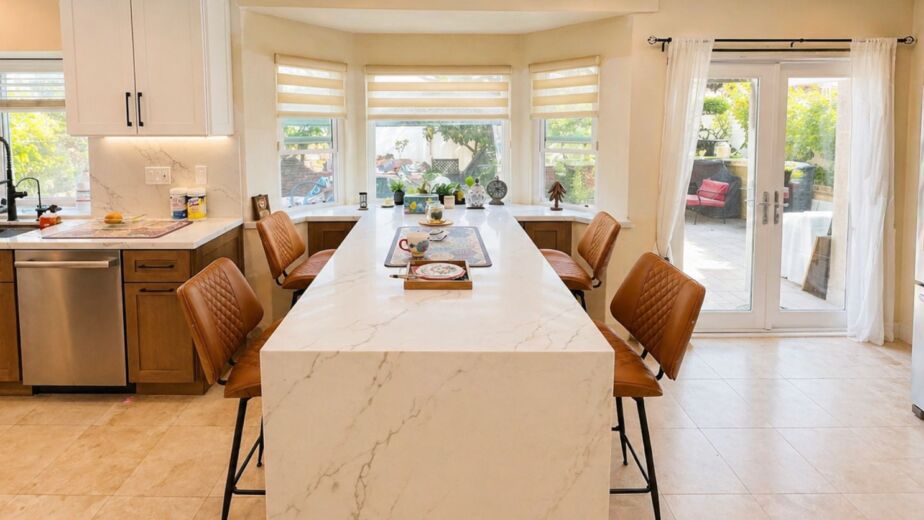
- Soft gray cabinets: Pair with white quartz, light marble, or medium-tone wood. A waterfall edge in light quartz extends the visual plane beautifully.
- Sage green or blue cabinets: Pair with warm white quartz, natural stone with warm veining, or butcher block. Avoid cool white countertops, which can clash with the warm undertones of most sage greens.
- Cream/greige cabinets: Pair with warm quartz (think Calacatta Gold veining), soapstone, or warm wood. These cabinets love natural materials.
Cabinet Colors and Backsplash Coordination
In a small kitchen, the backsplash is a significant visual element, it spans the entire wall between countertop and upper cabinets. For small kitchens, the most space-expanding backsplash choices are:
- White or light gray subway tile (classic and proven)
- Large-format porcelain tiles in a light tone (fewer grout lines = cleaner, larger look)
- Mirrored or metallic mosaic tile (reflects light dramatically)
- Matching the backsplash to the wall color (removes the visual “band” between counter and cabinet, expanding perceived height)
Hardware Choices That Complement Kitchen Cabinet Colors
Hardware is the jewelry of kitchen cabinets, and the right choice ties your entire kitchen cabinet color palette together.
- White or light gray cabinets: Brushed nickel, polished chrome, matte black (for contrast), or brushed gold
- Sage green or blue cabinets: Unlacquered brass or antique brass (warm metals make cool cabinet colors pop beautifully)
- Cream/greige cabinets: Oil-rubbed bronze, antique brass, or warm gold
- Dark accent cabinets: Polished brass, matte black, or aged bronze
The Role of Open Shelving in Small Kitchen Color Strategy
Open shelving has become a staple of small kitchen design, and it intersects with kitchen cabinet colors in an interesting way. When you replace one or two upper cabinet runs with open shelving, you introduce the wall color into the kitchen’s visual palette. If that wall color is light and in the same family as your kitchen cabinet colors, the effect is seamless and expansive. If the wall color contrasts sharply with your cabinets, it can fragment the visual field.
For small kitchens with open shelving, we recommend:
- Painting the wall behind open shelves the same color as or very close to the cabinet color
- Using floating shelves in white, light wood, or a color that bridges cabinets and walls
- Keeping shelf displays curated and organized, open shelving in a small kitchen amplifies both beauty and clutter equally
Trends in Kitchen Cabinet Colors for 2025 and Beyond
The world of kitchen cabinet color ideas is always evolving. Here’s what we’re seeing dominate in 2025 and what we expect to carry forward:
- Warm whites and off-whites continue to lead in popularity, the shift away from stark, cool whites toward warmer, creamier tones shows no signs of slowing
- Nature-inspired greens, from pale sage to deeper olive, are having a major moment, especially paired with natural wood open shelves and brass hardware
- Soft terracotta and warm clay tones are emerging as an earthy alternative to gray for lower cabinets and islands
- Two-tone cabinetry remains strong, with increasing interest in tonal (same-family) combinations rather than high-contrast pairings
- Greige is making a comeback after a few years of cooler-toned dominance, driven by the broader interior design shift toward warm, organic aesthetics
What isn’t changing: the enduring power of light kitchen cabinet colors in small spaces. Regardless of what’s trending, the physics of light reflection don’t change, and light, reflective cabinet colors will always make small kitchens feel bigger.
How Mars Brothers Kitchen & Bath Approaches Kitchen Cabinet Color Selection
At Mars Brothers Kitchen & Bath, color selection is never a guessing game. Every kitchen remodel we design begins with a comprehensive assessment of the space: its orientation, natural light conditions, existing architectural features, and the homeowner’s lifestyle and aesthetic preferences.
We use physical material samples, not just digital swatches, evaluated under the kitchen’s actual lighting conditions to ensure the kitchen cabinet colors we recommend look exactly right in your space. We also provide 3D design renderings that allow you to visualize the complete kitchen palette, cabinets, countertops, backsplash, hardware, and flooring, before a single cabinet door is hung.
If you’re ready to transform your small kitchen with the right cabinet colors and a design strategy built around your specific space, we’re here to help. Visit marsbroconstruction.com to schedule your free consultation with our team today.
Frequently Asked Questions About Kitchen Cabinet Colors for Small Kitchens
1. What are the best kitchen cabinet colors to make a small kitchen look bigger?
The most effective kitchen cabinet colors for making a small kitchen look bigger are light, high-reflectance tones: crisp whites, warm off-whites, soft light grays, and pale greiges. These colors reflect the maximum amount of natural and artificial light, which visually expands the perceived volume of the space. Among the most consistently recommended options are Benjamin Moore White Dove, Sherwin-Williams Alabaster (warm whites), Sherwin-Williams Repose Gray (soft gray), and Sherwin-Williams Agreeable Gray (greige). A satin or semi-gloss finish amplifies the light-reflectance effect. In two-tone kitchens, keeping upper cabinets in a light color while using a slightly deeper tone on lower cabinets is a proven strategy that adds design depth without closing in the space.
2. Can I use dark kitchen cabinet colors in a small kitchen?
Yes, but strategically. Dark kitchen cabinet colors like navy, forest green, charcoal, or black are beautiful and on-trend, but they absorb light, which can make a small kitchen feel even more confined when used on all surfaces. In a small kitchen, the safest way to incorporate dark cabinet colors is to limit them to lower cabinets only, or to an island, while keeping upper cabinets light. This two-tone approach adds drama and sophistication without the spatial penalty of all-dark cabinetry. If your small kitchen has exceptional natural light from large windows or a skylight, you have more latitude to use darker kitchen cabinet colors throughout.
3. How do I choose between white and gray kitchen cabinet colors for a small kitchen?
Both white and gray kitchen cabinet colors are excellent choices for small kitchens, the decision comes down to your kitchen’s light conditions and your aesthetic preference. White cabinets maximize light reflectance and create the most open, airy feel; they’re the best choice for kitchens with limited natural light. Gray cabinets add sophistication and are easier to keep looking clean (showing fewer scuffs and marks than bright white). For warm-light kitchens (south- or west-facing), cool gray can feel very livable. For north-facing kitchens with cool, indirect light, warm white or greige tends to perform better aesthetically. A professional consultation, like those offered by Mars Brothers Kitchen & Bath, includes evaluating your specific light conditions before making a recommendation.
4. Does cabinet finish affect how kitchen cabinet colors look in a small space?
Absolutely. Cabinet finish dramatically affects how kitchen cabinet colors perform in a small kitchen. High-gloss finishes reflect the most light, amplifying the space-expanding effect of light cabinet colors, but they also show fingerprints and smudges more readily. Satin and semi-gloss finishes offer a good balance of light reflectance and practical durability, making them the most popular choice for residential kitchens. Matte finishes absorb more light and can counteract the visual expansion you’re trying to achieve with a light color. As a general rule in small kitchens: the higher the sheen, the more light the finish reflects, and the larger the space will feel.
5. What kitchen cabinet color combinations work best in a two-tone small kitchen?
The most successful two-tone kitchen cabinet color combinations for small kitchens pair a light upper cabinet with a slightly deeper, but not dramatically darker, lower cabinet color. The best-performing combinations include: white uppers with sage green or soft blue lowers (fresh, organic, very on-trend); white or light gray uppers with greige or warm gray lowers (timeless, sophisticated, easy to live with); and cream uppers with a warm clay or soft taupe on lowers (earthy, inviting, pairs beautifully with natural materials). For bolder homeowners with more natural light, white uppers with navy or charcoal lowers make a striking statement while keeping the upper half of the kitchen light and open. The key rule for any two-tone combination in a small kitchen: always keep the upper cabinets at least as light as the lower cabinets, never darker on top.
Conclusion: The Right Kitchen Cabinet Colors Can Transform Your Small Kitchen
Color is one of the most accessible, high-impact tools available in any small kitchen transformation. The right kitchen cabinet colors, light, reflective, thoughtfully paired with countertops, backsplash, and hardware, can make a compact kitchen feel like a completely different space, without moving a single wall.
Whether you gravitate toward crisp white, soft sage, warm cream, or a sophisticated two-tone combination, the key is understanding how color interacts with light, space, and the other elements in your kitchen. That understanding, combined with the hands-on guidance of an experienced kitchen design team, is what separates a kitchen that looks bigger from one that truly feels bigger every time you walk into it.
At Mars Brothers Kitchen & Bath, we bring that expertise to every project we take on. From color selection to complete kitchen remodeling, our team is dedicated to creating kitchens that are as functional as they are beautiful.
Ready to find the perfect kitchen cabinet colors for your small kitchen? Contact Mars Brothers Kitchen & Bath today and schedule your free design consultation.