Most Orange County homes were never built with a true mudroom. What they have instead is a garage door that opens into a laundry hallway, and that hallway quietly becomes the busiest entrance in the house. Soccer cleats land on the floor. Beach sand from Huntington or Newport follows the boogie boards inside. Backpacks hang off the dryer, phones charge on the kitchen counter, and the dog’s leash lives wherever it was dropped last.
We see this pattern in Tustin, Irvine, and Mission Viejo homes almost every week. The good news is that a few feet of well-planned mudroom cabinets can turn that hallway into the most organized space in the home. The right layout gives every person a cubby, every pair of wet shoes a tray, every device a safe place to charge, and every pet a home for food, leashes, and gear.
This guide covers the mudroom cabinets and storage ideas we are designing for 2027 projects: cubby and locker layouts, boot tray drawers, charging stations, pet storage, the safety details most online guides skip, and what it all costs in Orange County.
Quick answer: The most useful mudroom cabinets combine three layers: a bench with boot storage at the bottom, open cubbies or lockers with hooks in the middle, and closed upper cabinets for off-season gear. For 2027, homeowners are adding drop-zone charging drawers with built-in outlets, pull-out pet feeding stations, and warm wood or muted green finishes. Plan around your traffic path first, then size each section to the people and pets who use it.

What Are Mudroom Cabinets, and Why Do Orange County Homes Need Them?
Mudroom cabinets are built-in storage units designed for the transition zone between the outdoors and the rest of the house. Unlike a coat closet, they put everything you grab on the way out (keys, bags, shoes, jackets, leashes) in one visible, assigned spot.
The Garage-Entry “Drop Zone” Most OC Homes Already Have
In Southern California, mud is rarely the problem. Sand, sports gear, sunscreen, and school bags are. Most families enter through the garage, not the front door, so the real mudroom is usually:
- A laundry room between the garage and the kitchen
- A short hallway off the garage door
- A wall inside the garage itself, next to the entry steps
- A side entry beside the kitchen in older single-story homes
Each location calls for slightly different mudroom cabinets. A laundry room combo needs room for the washer, dryer, and dryer vent. A garage wall needs finishes that tolerate heat swings. A hallway needs shallow depths so the walkway stays open.
Built-In Mudroom Cabinets vs. Freestanding Hall Trees
Freestanding hall trees and benches work for renters and small budgets, but they rarely fit the space precisely, and they leave gaps where dust and sand collect. Built-in mudroom cabinets are scribed to your walls, run floor to ceiling, and can include features no furniture piece offers: integrated lighting, hidden outlets, ventilated shoe storage, and pet feeding drawers. They also add resale appeal. Buyers touring Irvine and Tustin homes notice an organized drop zone immediately, because they picture their own family using it.
How Do You Plan a Mudroom Cabinet Layout That Actually Works?
Good mudroom cabinets start with how your household moves, not with a catalog. Before we draw anything, we watch the path from the car to the kitchen and ask who drops what, and where.
Start With the Traffic Path
Stand at the door you use most and walk inside the way you normally would. Note where bags hit the floor and where shoes come off. That spot is where your bench and boot storage belong. Keys and phones should sit within one step of the door, not across the room.
Keep the walkway clear, too. The California Residential Code generally calls for hallways at least 36 inches wide, and in a busy entry we prefer more. That is why many hallway mudroom cabinets are built shallower than kitchen cabinets.
Standard Dimensions for Mudroom Lockers and Benches
These are the dimensions we use as a starting point for mudroom cabinets in most OC homes:
- Bench seat height: 17 to 19 inches, comfortable for adults tying shoes
- Bench depth: 15 to 18 inches; deeper benches eat walkway space
- Locker or cubby width: 15 to 24 inches per person; 18 inches is the sweet spot
- Tall cabinet depth: 15 to 18 inches in hallways, up to 24 inches in larger laundry rooms
- Coat hooks: about 60 inches high for adults and 36 to 42 inches for young kids
- Upper cabinets: typically 12 to 15 inches deep for hats, gloves, and seasonal items
Zone by Person, Not by Item
The single best organizing rule for mudroom cabinets is one section per person. Give each family member a locker with their own hook, shelf, and basket. When everyone owns a defined space, clutter stops migrating, and kids learn to put things back because the cubby has their name on it.
Mars Brothers Pro Tip: Plan one more locker than you need today. Kids add sports, families add pets, and grandparents visit for weeks at a time. An extra 18-inch section costs far less during the build than adding mudroom cabinets later and trying to match the finish.

Mudroom Cubby Ideas for 2027: Open, Closed, and Hybrid Lockers
Cubbies are the heart of most mudroom storage ideas. The choice between open and closed storage depends on how tidy your household really is.
Open Cubbies With a Bench
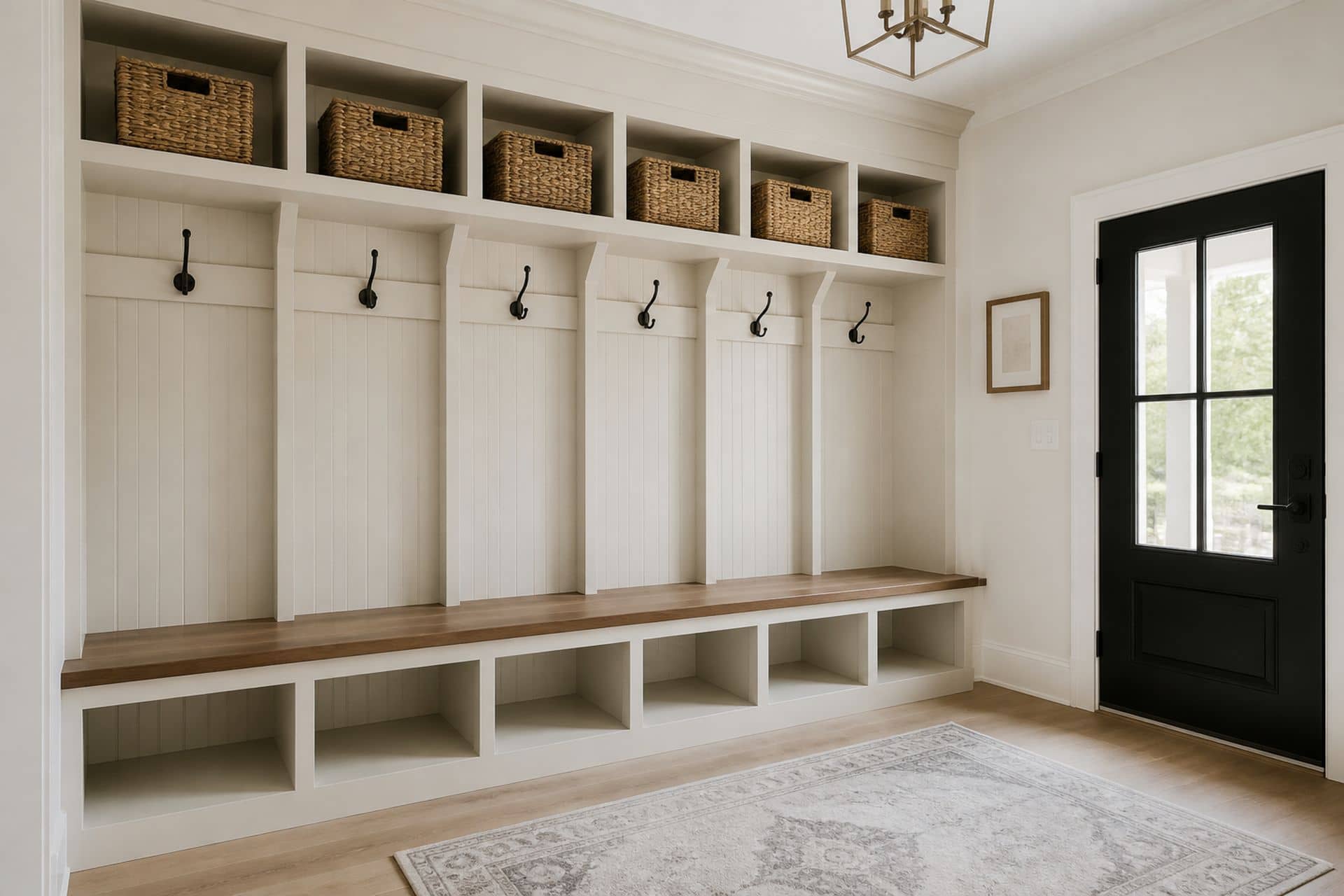
Open lockers are the classic look: a bench at the bottom, a backer panel with hooks, a shelf above, and a cubby at the top for a basket. They are fast to use, easy to clean, and they let damp jackets air out. The trade-off is that everything is on display, so they work best for households that reset the space daily.
Closed Locker Cabinets With Doors
Full-height doors hide the visual noise, which is why we specify closed mudroom cabinets for entries visible from the kitchen or family room. Add ventilation slots or a perforated back panel so wet towels and jackets do not trap moisture. Closed locker cabinets are also the better choice in homes listed for sale soon, because they photograph clean.
Hybrid Lockers: The 2027 Favorite
The layout we are designing most for 2027 combines both. Open hooks and a bench sit at the bottom for daily grab-and-go items, and closed doors sit above for backups, sports gear, and seasonal clothing. This hybrid approach gives you the speed of open cubbies with the calm look of closed mudroom cabinets.
Boot Tray and Shoe Storage Ideas That Keep Sand and Mud Contained
Shoes create most of the mess in any entry. Smart boot storage keeps it off your floors and out of the rest of the house.
Pull-Out Boot Tray Drawers
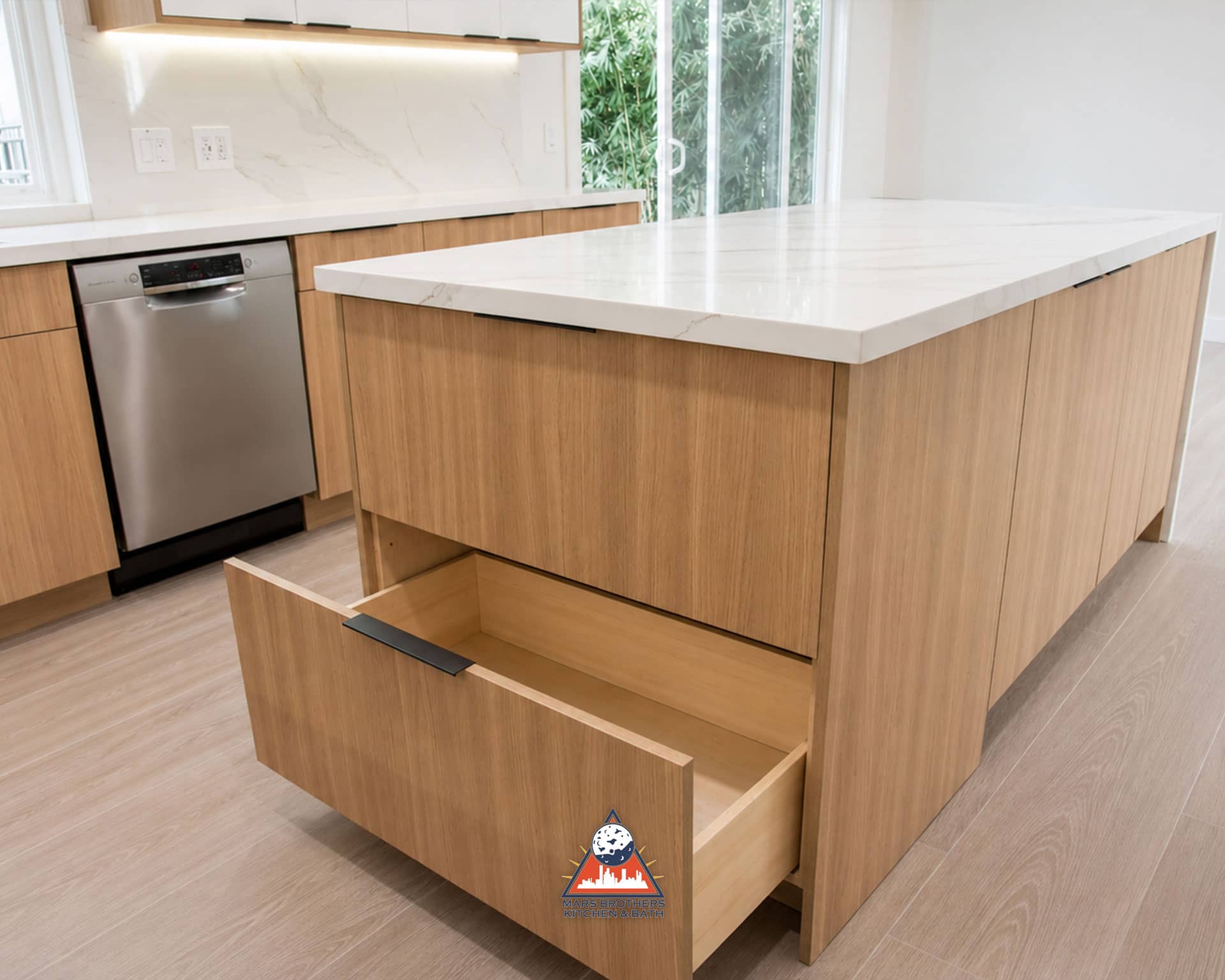
Instead of a loose rubber tray on the floor, we build a full-extension drawer under the bench fitted with a removable, washable tray. You pull it out, drop wet or sandy shoes in, and push it closed. When it gets dirty, the tray lifts out and rinses off in the yard. This is one of the most requested upgrades in our mudroom cabinets, especially for beach-city families.
Ventilated Shoe Storage Cabinets
For families with many pairs, a tall shoe cabinet with angled or slatted shelves holds far more than a bench. Slatted shelves let sand fall through to a tray below and let shoes dry. Keep everyday pairs at the bottom and dress shoes above.
Materials That Survive Wet Gear
The lower 24 inches of mudroom cabinets take a beating from wet shoes, mop water, and dog paws. For long life, we recommend:
- Plywood cabinet boxes instead of particleboard, which swells when wet
- Catalyzed or conversion-varnish paint that resists scuffs and moisture
- A waterproof liner or solid-surface panel on bench tops and boot shelves
- A recessed or tiled toe kick that hides scuffs and wipes clean
- Durable flooring such as porcelain tile or luxury vinyl plank under the bench
Mars Brothers Pro Tip: If your family lives near the beach, ask for a slatted shelf directly above the boot tray drawer. Sand drops through the slats into the tray instead of spreading across the cabinet floor, and cleanup takes thirty seconds with a shop vacuum.
How Do You Build a Charging Station Into Mudroom Cabinets Safely?
A drop-zone charging station is the most popular 2027 addition to mudroom cabinets. When phones, earbuds, and tablets charge by the door, they stop cluttering the kitchen counter and nobody leaves home without them.
Drop-Zone Drawers and Cubbies With Built-In Outlets
The cleanest setup is a shallow drawer or open cubby with a listed in-drawer outlet or USB-C charging module. Other options include:
- A pull-out charging drawer with cord management and dividers for each device
- An upper cubby with a recessed outlet and a small shelf for keys and wallets
- A wall-mounted mail and key organizer above the bench with integrated USB ports
- A tall cabinet with a dedicated, ventilated shelf for larger battery packs
Heat, Ventilation, and Lithium-Ion Battery Safety
Charging creates heat, and a closed cabinet traps it. The U.S. Fire Administration’s battery fire safety guidance recommends choosing certified products, storing spare batteries away from anything that can burn, and not charging lithium-ion batteries in temperatures above 105°F. That last point matters in Orange County. A garage-wall mudroom in Irvine, Lake Forest, or Mission Viejo can exceed that on a September afternoon.
Our rules for charging inside mudroom cabinets:
- Charge phones and small devices only; keep e-bike and scooter batteries out of cabinetry
- Use open-front cubbies or add ventilation grilles to closed charging cabinets
- Choose listed outlets and chargers, never daisy-chained power strips
- Keep charging stations inside conditioned space, not in a hot garage, whenever possible
- Stop using any battery that swells, smells, leaks, or gets unusually hot
Wiring and Permits in Orange County
Adding a new outlet inside mudroom cabinets is electrical work, and in most Orange County cities a new circuit or receptacle requires a permit and inspection. A licensed electrician will run the circuit, add GFCI or AFCI protection where the code calls for it, and make sure the outlet is rated for in-cabinet use. Before you sign, confirm that both your remodeler and the electrician hold active licenses with the California Contractors State License Board.
Mars Brothers Pro Tip: Put the charging station at adult chest height, around 42 to 48 inches. It keeps cords away from toddlers and pets, it is easy to see on the way out, and it is far enough from the boot tray that wet shoes never get near the outlet.

Pet Gear Storage Ideas: Feeding Stations, Leash Walls, and Built-In Dog Beds
For many families, the dog is the reason the entry gets messy. Pet-friendly mudroom cabinets give food, leashes, toys, and towels a permanent home.
Pull-Out Pet Feeding Drawers
A low drawer that slides out to reveal recessed stainless bowls keeps food and water off the walkway, so no one kicks the water bowl on the way to the car. When mealtime ends, the drawer closes. We usually set it 4 to 8 inches off the floor for medium dogs and raise it for large breeds.
Pet Food Storage Cabinets
The U.S. Food and Drug Administration’s guidance on proper storage of pet food and treats recommends keeping kibble in its original bag inside a container with a snug lid, in a cool, dry place below 80°F, and in a secure spot your pet cannot get into. That translates directly into cabinet design:
- A tilt-out or pull-out bin sized to hold the whole bag inside a lidded container
- Placement inside the house rather than a hot garage wall
- A door or drawer your dog cannot nose open, or a simple child-safety latch
- A wipeable interior so crumbs and residue clean up quickly
Built-In Dog Beds and Crate Cabinets
An open nook under the bench or at the end of a locker run becomes a built-in dog bed. For crate-trained dogs, we can build a cabinet-front crate with a ventilated door that matches the rest of the mudroom cabinets, so the crate disappears into the design.
Leash, Towel, and Grooming Stations
A narrow 12- to 15-inch cabinet beside the door can hold leashes on hooks, waste bags in a small drawer, paw towels on a bar, and grooming tools on an upper shelf. If you have room in a laundry mudroom combo, a raised dog-wash shower is the ultimate upgrade, though it adds plumbing and tile work to the project.
What Mudroom Cabinet Trends Will Define 2027?
Design trends move slower in mudrooms than in kitchens, but 2027 projects are showing clear patterns:
- Warm wood tones: Rift-cut and natural white oak are replacing all-white lockers. Our guide to white oak cabinets in Irvine and Tustin remodels covers why the finish is gaining ground.
- Earthy colors: Sage, olive, and muted blue-greens on painted mudroom cabinets, often paired with oak benches
- Floor-to-ceiling built-ins: Full-height storage walls that borrow ideas from tall pantry cabinet trends
- Integrated LED lighting: Motion-activated strips inside lockers and under upper cabinets
- Fluted and slatted panels: Texture on bench backs and locker doors that also hides scuffs
- Laundry and mudroom combinations: One room that handles drop-off, washing, and folding
- Matching kitchen details: Door styles and hardware that tie the mudroom to the kitchen, often part of a larger remodel
How Do You Keep Tall Mudroom Cabinets Safe in Earthquake Country?
Tall lockers loaded with gear become top-heavy, and kids love to climb them. The U.S. Consumer Product Safety Commission’s Anchor It! campaign urges families to anchor all furniture with drawers, doors, and shelves to the wall to prevent tip-over injuries.
Properly installed built-in mudroom cabinets are screwed to wall studs through a solid hanging rail, which is one advantage over freestanding units. In Southern California, we also recommend:
- Positive latches on upper doors so contents stay inside during shaking
- Heavy items stored low, light items stored high
- No open shelves of glass or ceramics above the bench
- Clearance for the garage-to-house door, which California code requires to be self-closing, so cabinets never block its swing
How Much Do Mudroom Cabinets Cost in Orange County?
Pricing depends on size, construction, finish, and how many specialty features you add. The ranges below reflect installed mudroom cabinets in central Orange County in 2026, for projects planned into 2027. They exclude flooring, plumbing, and major electrical work unless noted.
Mudroom Cabinet Option | Typical 2026 OC Range (installed) |
Stock or semi-stock bench with open cubbies (4 to 5 ft wide) | $1,800 – $4,000 |
Semi-custom locker wall, 3 to 4 lockers with bench and uppers | $5,500 – $12,000 |
Custom floor-to-ceiling built-in mudroom wall, plywood boxes, painted or oak finish | $10,000 – $22,000+ |
Pull-out boot tray drawer with removable liner (add-on) | $250 – $700 |
Charging drawer or cubby with in-cabinet outlet, electrician and permit included | $450 – $1,200 |
Pull-out pet feeding drawer or pet food storage bin (add-on) | $600 – $1,500 |
Built-in dog bed nook or cabinet-front crate | $900 – $2,500 |
Laundry and mudroom combo remodel, cabinets and counters only | $9,000 – $25,000 |
What moves the number:
- Construction: Plywood boxes and dovetail drawers cost more than particleboard, but they last far longer in wet entries
- Finish: Stained white oak and catalyzed paint cost more than thermofoil or melamine
- Height: Floor-to-ceiling mudroom cabinets require more material and scribe work than a bench with uppers
- Features: Each specialty drawer, outlet, light, or pet station adds cost
Pricing reflects 2026 Orange County market conditions and is reviewed annually. Your exact figure comes from an itemized written quote after a free consultation, and financing options can help you build the full system now instead of in stages.
Which Mudroom Setup Fits Your Orange County Home?
Each community points toward slightly different mudroom cabinets:
- Tustin: Tustin Ranch homes often have wide laundry rooms off the garage. A hybrid locker wall on one side with the washer and dryer on the other turns the room into a true drop zone.
- Irvine: Newer villages have tight garage-entry hallways. Shallow 15-inch mudroom cabinets with a charging cubby keep the walkway open and the counters clear.
- Newport Beach and Huntington Beach: Beach gear rules. Slatted shoe shelves, boot tray drawers, wetsuit hooks, and water-resistant finishes do the heavy lifting.
- Mission Viejo and Lake Forest: Many families have large dogs and hot garages. Indoor pet feeding drawers and ventilated, indoor charging stations make the most sense here.
If your mudroom shares space with a reach-in or walk-in closet, our closet design and installation team can plan both together. You can also see finishes and box construction in person at our Tustin cabinet showroom, or browse recent projects for layout ideas.
Frequently Asked Questions About Mudroom Cabinets
How deep should mudroom cabinets be?
Most mudroom cabinets work best at 15 to 18 inches deep for lockers and benches, which holds jackets, backpacks, and shoes without crowding the walkway. In larger laundry rooms you can go to 24 inches for tall storage. Upper cabinets usually run 12 to 15 inches deep.
What is the best material for mudroom cabinets?
Plywood cabinet boxes with a catalyzed paint or conversion-varnish finish are the most durable choice for wet, high-traffic entries. Particleboard swells when it gets wet, so avoid it in the lower section near boot trays and pet bowls. Add a waterproof liner or solid-surface top on benches and shoe shelves.
Can you put an outlet inside mudroom cabinets for charging?
Yes. A licensed electrician can install a listed in-drawer outlet or a recessed receptacle inside a cubby. In most Orange County cities, a new outlet requires a permit and inspection. Keep the charging area ventilated, use certified chargers, and charge only phones and small devices, not e-bike batteries.
How much space do you need for a mudroom bench with cubbies?
A functional bench with cubbies needs about 4 feet of wall for two to three people, and 6 to 8 feet for a family of four or more. Plan roughly 18 inches of width per person. Leave at least 36 inches of clear walkway in front of the bench so people can pass while someone is sitting.
Are built-in mudroom cabinets worth the investment?
For most families, yes. Built-in mudroom cabinets fit the space exactly, hold far more than freestanding furniture, and can include charging, pet, and boot storage features. They make daily routines faster and add visible value for buyers, especially when the finishes match the kitchen.
Design Your Mudroom With Mars Brothers Kitchen & Bath
The right mudroom cabinets depend on your entry, your family’s routine, and the pets and gear that come through the door every day. Whether you want a simple bench with cubbies, a hybrid locker wall with a charging drawer, or a full laundry and mudroom combo with a pet feeding station, our in-house designer and installation crew handle it from measurements to the final walkthrough. Visit our Tustin showroom to compare cabinet finishes, open the drawers, and test the hardware in person.
- Call: (949) 503-0999
- Website: marsbrokitchenbath.com
- Instagram: @marsbrotherskitchenbath
- Showroom: 1451 Edinger Ave., Ste B, Tustin, CA 92780
Book your free design consultation today. Mars Brothers Kitchen & Bath: Build Your Space. Love Your Place.