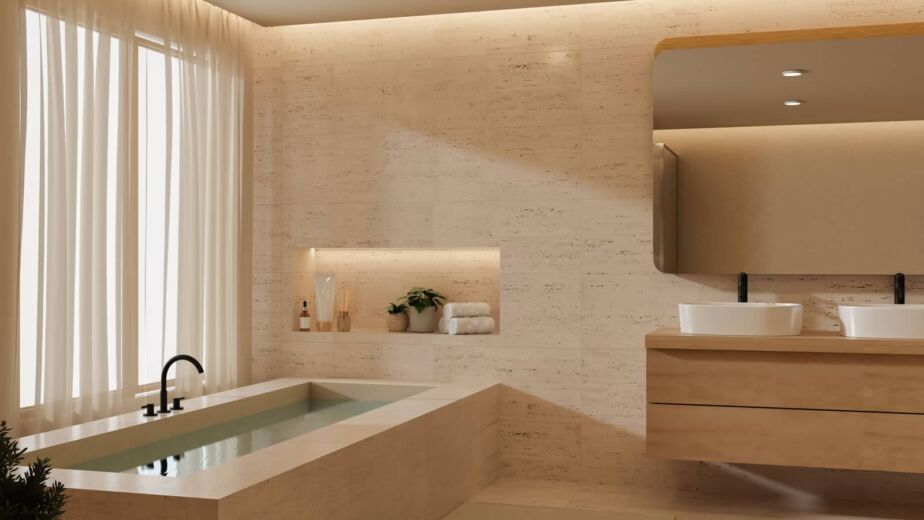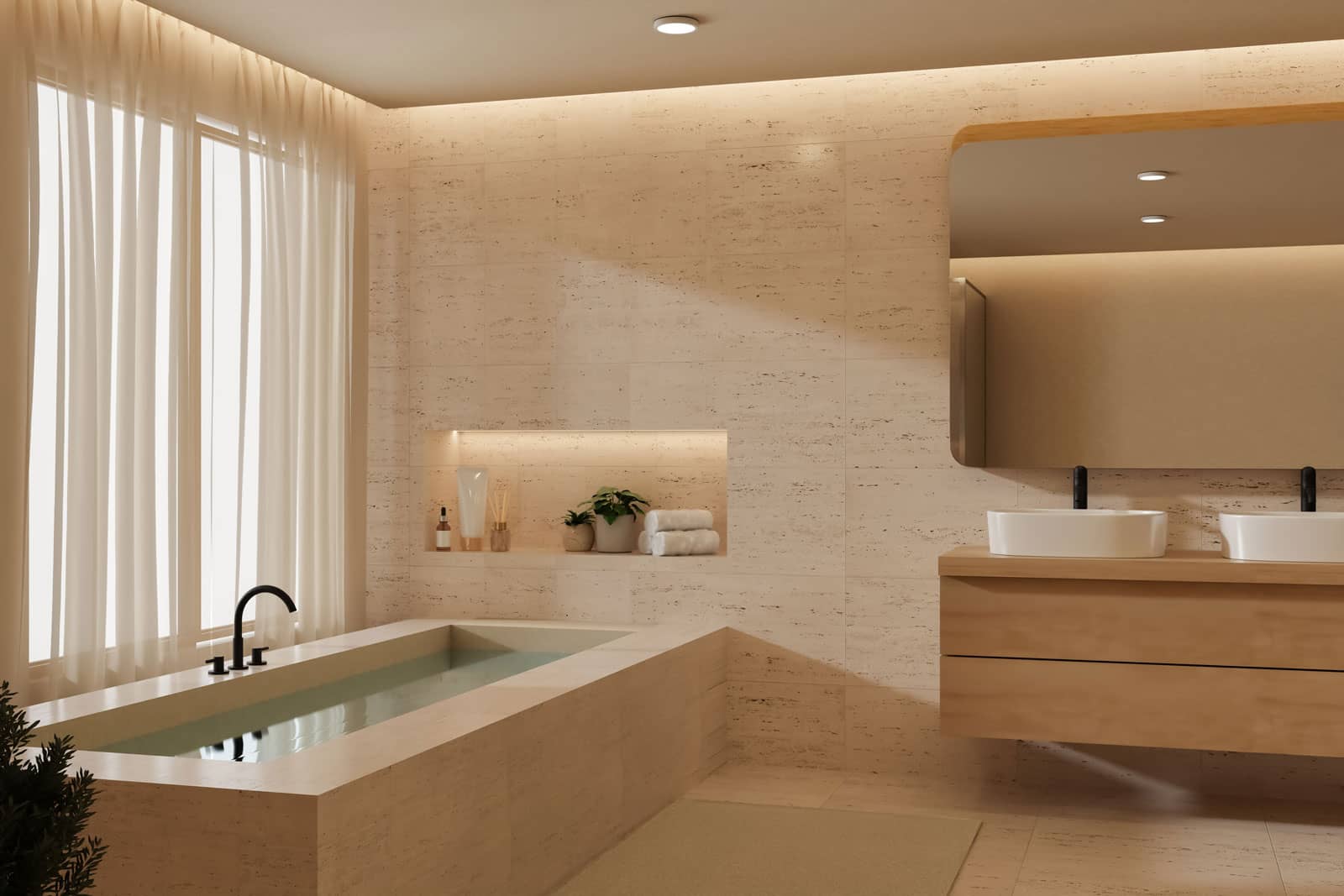
If you live near the Orange County coast – Newport Beach, Dana Point, Laguna Niguel – you already know the enemy. It isn’t dramatic flooding. It’s the slow, patient, everyday moisture: shower steam that never fully clears, humidity rolling in off the water, the towel dropped on the floor and forgotten. That constant dampness is what destroys bathroom floors, and it’s why durable bathroom floorings for high-moisture homes come up in nearly every remodel we do.
At Mars Brothers Kitchen & Bath, we’ve torn out more water-ruined bathroom floors than we can count – swollen laminate, cupped hardwood, black mold blooming under vinyl that was never sealed at the edges. We’ve also installed the durable bathroom floorings that hold up for decades instead. This is the honest version: which materials are genuinely flooring that withstands moisture, which fail, and how to choose the right durable bathroom floorings for the way you live.
Why Does Moisture Destroy Most Bathroom Floors – and Which Durable Bathroom Floorings Survive It?
Before we rank the most durable bathroom floorings, it helps to understand what you’re actually fighting. Moisture attacks a bathroom floor three different ways, and a material can survive one while failing at another.
- Surface water. Splashes, drips, the puddle after a bath. Every floor handles this fine if it’s wiped up.
- Standing water. An overflowing toilet, a tub left running, a supply line that let go overnight. This tests seams, grout, and edges.
- Water vapor. The quiet killer. Shower steam and ambient humidity don’t puddle – they seep into porous materials and condense inside them, feeding mold from the inside out.
That third category is why humidity control matters as much as the floor itself. The U.S. Environmental Protection Agency recommends keeping indoor relative humidity below 60% – ideally 30% to 50% – because mold can’t establish itself below that threshold. Even the most durable bathroom floorings struggle if the room routinely sits above 60% humidity with no fan running.
So the real answer to the best flooring for bathrooms is two-part: the right material, in a properly ventilated room. Both halves matter, and most homeowners only think about the first.
Mars Brothers Pro Tip: Before you spend a dollar on new flooring, spend $20 on a hygrometer and check your bathroom’s humidity after a shower. If it spikes above 70% and stays there for 30+ minutes, no flooring on earth will save you long-term. Fix the ventilation first, then choose your durable bathroom floorings.
What Makes Durable Bathroom Floorings Actually Durable?
“Durable” gets thrown around loosely. When we evaluate durable bathroom floorings for a coastal Orange County home, we score each material against six tests:
- Waterproof vs. water-resistant. Waterproof means water can’t penetrate the material, ever; water-resistant means it holds out for a while. In a high-moisture home, that gap is the difference between a floor that lasts 25 years and one that fails in five.
- Dimensional stability. Does it swell, cup, or warp through repeated wet-dry cycles? This is what kills wood and laminate.
- Slip resistance when wet. A floor that sends someone to the ER isn’t durable in any way that matters.
- Mold and mildew resistance. Non-porous, moisture-resistant and mold-resistant surfaces starve mold; porous ones feed it.
- Grout and seam integrity. A material can be waterproof while its joints are not.
- Repairability. When something fails, can you fix one section or must you replace the whole floor?
The strongest durable bathroom floorings score well across all six. Most materials ace two or three and fail the rest. Here’s how the leading durable bathroom floorings actually rank.
The Most Durable Bathroom Floorings, Ranked for Moisture Resistance
Here is our real-world ranking of durable bathroom floorings, built from hundreds of Orange County installs.
Not a manufacturer’s brochure – just what has actually held up.
1. Porcelain Tile: The Gold Standard for Durable Bathroom Floorings
If we could recommend only one material for a high-moisture bathroom, it would be porcelain tile – and it’s not close. Among durable bathroom floorings, porcelain is the benchmark everything else is measured against.
Porcelain is a denser, harder cousin of ceramic, fired hotter until it’s nearly impervious to water. The spec: true porcelain absorbs less than 0.5% of its weight in water. That number is why it dominates the durable bathroom floorings conversation.
Why porcelain wins:
Among durable bathroom floorings, porcelain wins on every axis at once:
- Effectively waterproof – the tile body barely absorbs water
- Dimensionally bulletproof – doesn’t swell, cup, or move with humidity
- Mold-proof surface – non-porous glazed porcelain gives mold nothing to eat
- Lasts decades – a properly installed porcelain floor can outlive the house
- Endless design range – it convincingly mimics wood, marble, concrete, and stone, so you get the look without the vulnerability
The honest drawbacks:
- The grout is the weak point, not the tile – more below, it’s the most important thing to get right
- Cold and hard underfoot, though radiant heat solves the cold half
- Slippery with the wrong finish – polished porcelain plus shower water is a fall waiting to happen; choose textured or matte
- Professional installation matters – a bad tile job fails at the grout and substrate no matter how good the tile is
For most high-moisture Orange County bathrooms, porcelain tile is the answer to durable bathroom floorings – the most durable bathroom flooring you can buy. Everything below competes for second.
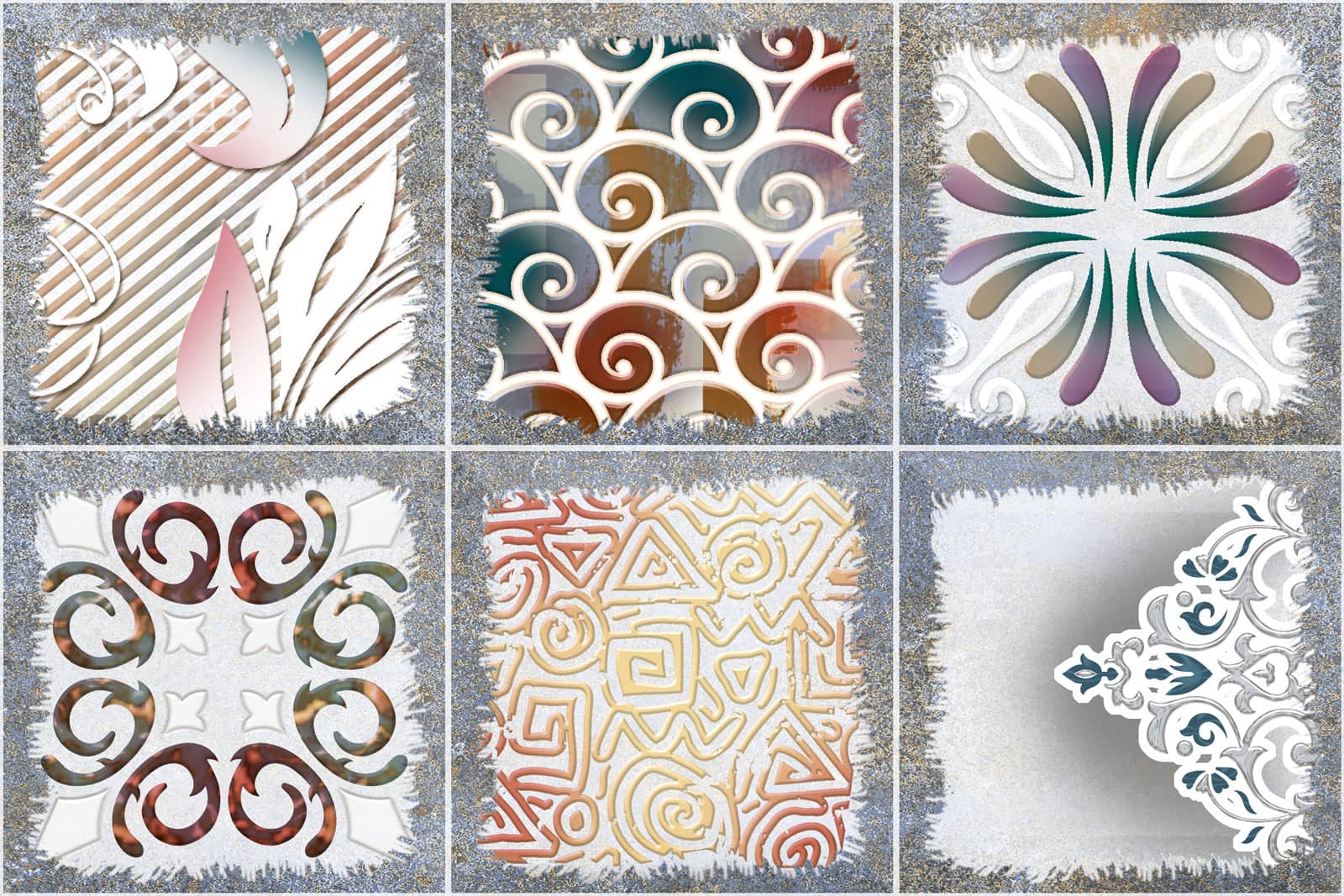
2. Ceramic Tile: Affordable Durable Bathroom Floorings
Ceramic is porcelain’s less-dense relative and a strong contender among durable bathroom floorings – with one caveat.
Ceramic absorbs more water (typically 0.5–3%), which makes it water-resistant flooring rather than truly waterproof. In a powder room or low-traffic guest bath, that rarely matters. In a primary bathroom showered in twice a day, porcelain’s edge shows.
- Pros: cheaper than porcelain, glazed surface resists moisture, huge design selection, easy to clean
- Cons: higher water absorption, chips a bit easier, avoid unglazed varieties in wet zones
Ceramic earns its spot on any list of durable bathroom floorings – you’re just trading a little moisture performance for a lower price.
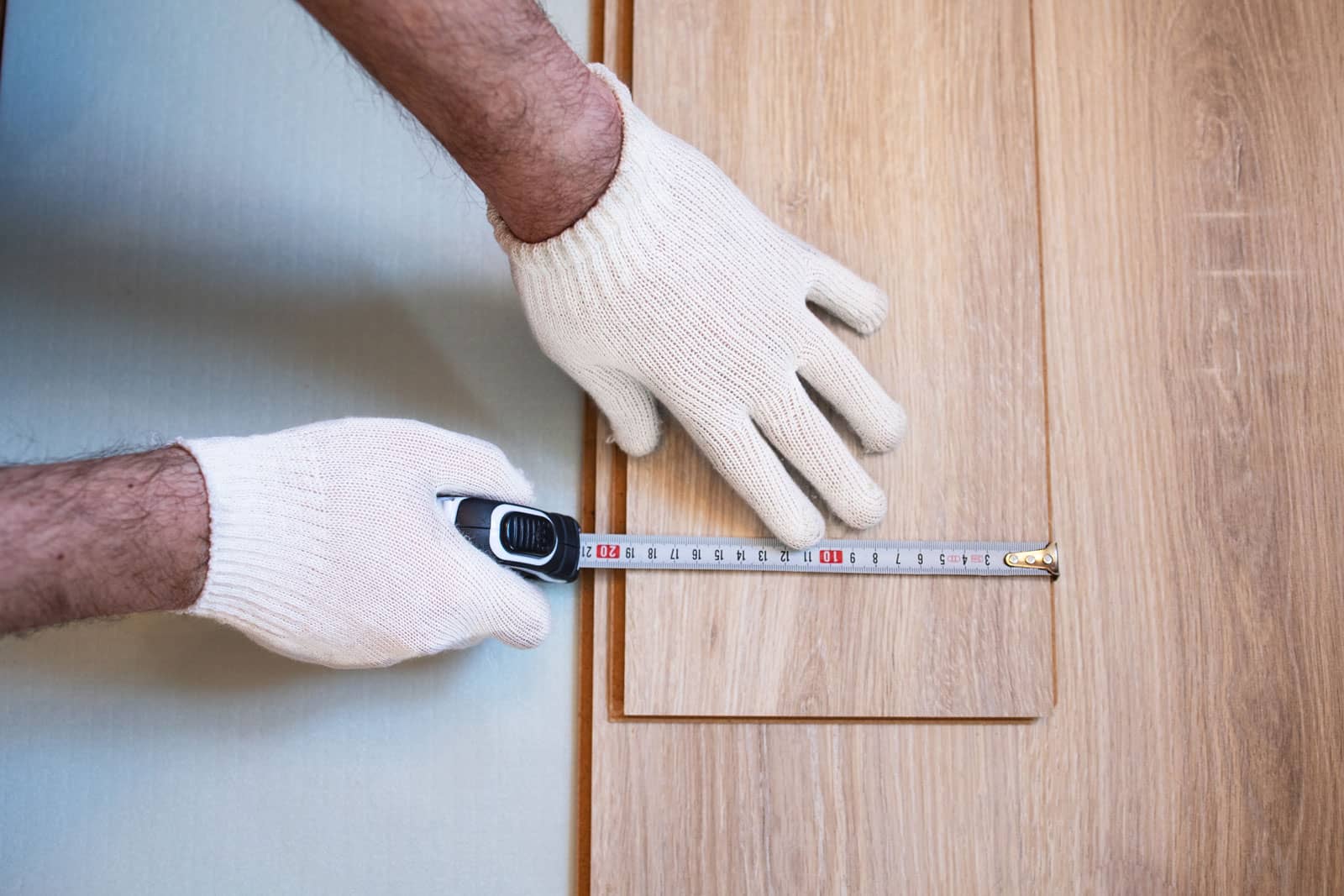
3. Luxury Vinyl Plank: The Modern Workhorse Among Durable Bathroom Floorings
Waterproof luxury vinyl plank (LVP) has quietly become one of the most popular durable bathroom floorings in Orange County remodels. The best products are 100% waterproof, warm underfoot, and genuinely convincing in wood and stone visuals.
Not all vinyl is equal, and the category confuses people. What matters:
- 100% waterproof cores – look for rigid-core SPC (stone plastic composite) or WPC (wood plastic composite), which don’t swell like older vinyl or laminate
- Warmer and softer than tile – a real advantage in a bathroom you cross barefoot at 6 a.m.
- Easier DIY installation – many click-lock systems float over the subfloor
- Quieter and more forgiving underfoot than porcelain
Where luxury vinyl slips among durable bathroom floorings:
- The seams and perimeter – waterproof at the surface, but standing water can migrate through edges to the subfloor, so we seal the perimeter in a full bath
- Cheap products fail – buy on wear-layer thickness (20 mil or more)
- Can dent under heavy point loads
- Not as long-lived as tile – good for 15–25 years, but porcelain laughs at that
For clients who want warmth, comfort, and a waterproof floor without tile’s hardness, luxury vinyl is among the best durable bathroom floorings on the market today.
4. Natural Stone: Beautiful and Durable, but Demanding
Marble, travertine, slate, granite – natural stone is stunning, and in the right hands it ranks among the most durable bathroom floorings you can install. But it has a secret that trips up homeowners: it’s porous.
Unsealed stone absorbs water, stains, and – in a high-moisture room – grows mold in its pores. Stone can absolutely be one of the durable bathroom floorings, but only with disciplined maintenance.
- Slate – the best natural stone for wet baths: dense, naturally slip-resistant, less porous than most
- Granite – dense and durable, but reads formal and can be slick when polished
- Marble and travertine – gorgeous but soft, porous, and demanding; they need frequent sealing and etch easily
The rule for stone among durable bathroom floorings: seal at installation, re-seal on schedule (often annually), and honor the maintenance or the stone lets you down. If you love stone and will maintain it, it’s beautiful. If you’re a set-it-and-forget-it household, look higher on this list.
5. Sheet Vinyl: Underrated Budget Durable Bathroom Floorings
Sheet vinyl gets no respect, and that’s a mistake when we’re ranking durable bathroom floorings on a tight budget. Among cheap durable bathroom floorings, nothing beats it on waterproofing. Because it comes in large continuous sheets, it has the fewest seams of any flooring – the fewest places for water to get in.
- Pros: genuinely waterproof, nearly seamless, inexpensive, soft and warm, easy to clean
- Cons: reads less premium, can puncture or tear, harder to repair invisibly, shorter lifespan than tile or quality LVP
For a rental, a kids’ bath, or a budget remodel where waterproofing beats prestige, sheet vinyl is one of the most quietly effective durable bathroom floorings available.
Which Materials Are Not Durable Bathroom Floorings in a High-Moisture Home?
Just as important as knowing the durable bathroom floorings is knowing which materials betray you. These are the opposite of durable bathroom floorings, and we’ve ripped all of them out of Orange County bathrooms:
- Solid hardwood. Beautiful, and completely wrong for a wet bathroom. Wood is hygroscopic – it absorbs moisture, swells, cups, and eventually rots. No sealer changes its fundamental nature. Every “waterproofed” hardwood bathroom floor we’ve removed failed at the seams.
- Traditional laminate. Laminate has a fiberboard (HDF) core that acts like a sponge. Get it wet at a seam and it swells, buckles, and delaminates permanently. Newer “waterproof laminate” exists and is better, but standard laminate has no business in a high-moisture bathroom.
- Carpet. We shouldn’t have to say it, but we’ve seen it. Carpet in a bathroom is a mold farm with a soft surface. Please, no.
- Bamboo and cork (in most cases). Marketed as eco-friendly and water-resistant, but both are organic and absorb moisture over time. Cork in particular can be a mold risk in a genuinely wet room. There are sealed engineered versions, but they’re a gamble in high-moisture conditions.
If a salesperson pushes any of these as durable bathroom floorings for a coastal bathroom, walk away.
Why Grout Is the Secret to Durable Bathroom Floorings in Tile
People ask us all the time how durable are waterproof flooring options in the bathroom. Here’s the honest answer: with tile, the tile almost never fails. The grout fails. You can install the most durable bathroom floorings on the planet and still get water damage if the grout and substrate are wrong.
Grout is porous by default, and in a high-moisture bathroom that porosity is a direct path to the subfloor. Getting it right is what turns tile into one of the truly durable bathroom floorings – and getting it wrong is what molds a tile floor in three years.
- Use epoxy grout in wet zones. It costs more and installs harder, but it’s essentially non-porous, stain-proof, and far more water-resistant than cement grout. In a shower, it’s worth every penny.
- If you use cement grout, seal it – and re-seal it. Skip this and you’ve undermined your durable bathroom floorings from the joints out.
- Minimize grout lines. Larger-format tiles mean fewer joints and fewer vulnerable seams – a real design lever.
- The waterproof membrane underneath matters most. Beneath quality tile, a proper waterproofing membrane (an uncoupling membrane or liquid-applied barrier) is what actually protects the subfloor. It’s invisible, unglamorous, and the single most important part of any durable bathroom floorings install in tile.
Mars Brothers Pro Tip: When you’re comparing tile quotes, ask each contractor exactly what waterproofing membrane they use under the tile and whether they’re using epoxy or cement grout in the wet zones. A contractor who has a confident, specific answer knows how to build durable bathroom floorings. A vague answer is a red flag – the membrane is where the corners get cut, because the homeowner never sees it.
Slip Resistance: The Durability Factor Everyone Forgets
A floor that survives moisture but sends you to the hospital is not, by any sensible definition, durable. And bathrooms are genuinely dangerous rooms.
According to the Centers for Disease Control and Prevention, about one in four older adults falls each year, and falls are the leading cause of injury among Americans 65 and older. The bathroom – hard surfaces, tight spaces, wet floors – is one of the highest-risk rooms in the home. When we spec durable bathroom floorings, slip resistance isn’t a footnote; it’s a safety requirement.
How to build slip-resistant floors into your durable bathroom floorings:
- Choose textured or matte finishes over polished ones in wet areas. Polished porcelain and honed marble turn treacherous when wet.
- Look for a DCOF rating of 0.42 or higher for floors expected to get wet – the industry standard, and reputable tile lists it.
- Smaller tiles mean more grout lines, which improves traction on shower floors. The one place extra grout is a feature.
- Consider texture patterns in luxury vinyl and sheet vinyl, offered specifically for wet rooms.
If your household includes older adults, young children, or anyone with mobility challenges, slip resistance belongs at the very top of your durable bathroom floorings criteria – above looks, above price.
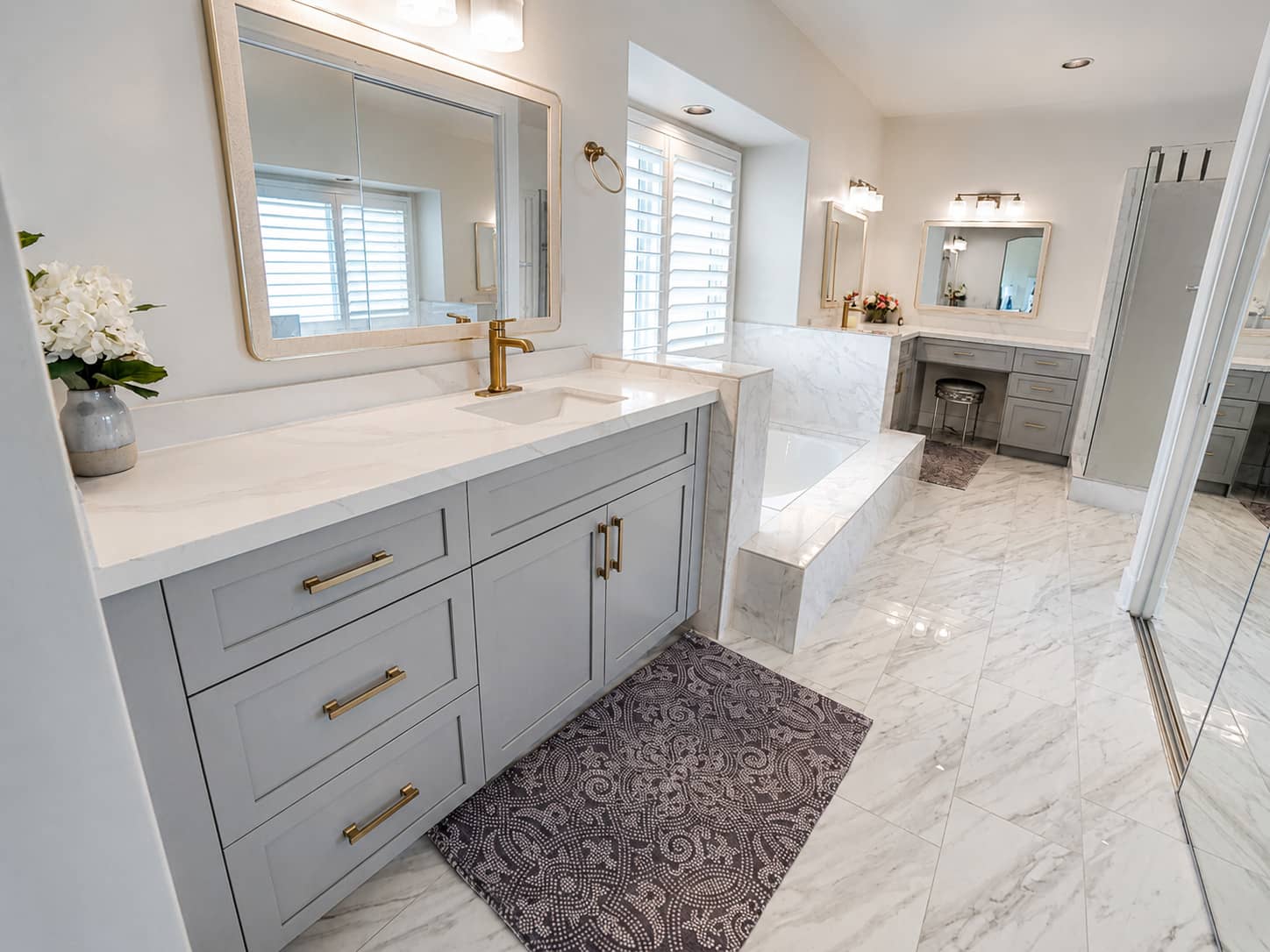
How Much Do Durable Bathroom Floorings Cost in Orange County?
Here’s what we see across our 2026 Orange County bathroom remodeling projects – observed installed ranges, material plus labor, so your project may vary.
Across durable bathroom floorings, per square foot installed:
- Sheet vinyl: $3–$8. The budget durable bathroom flooring.
- Ceramic tile: $8–$18. Strong value.
- Luxury vinyl plank (quality): $6–$16. Best warmth-to-waterproof ratio.
- Porcelain tile: $12–$28. The gold standard, priced accordingly.
- Natural stone: $18–$50+. Beautiful and demanding; slate and marble sit at the higher end.
Add-ons that apply across durable bathroom floorings:
- Waterproofing membrane (tile): $2–$6 per square foot – never skip this
- Epoxy grout upgrade: $2–$5 per square foot over standard cement grout
- Subfloor repair or replacement: $3–$10 per square foot if there’s existing water damage
- Radiant floor heating: $8–$20 per square foot – warms cold tile, and helps floors dry faster
- Old flooring removal and disposal: $2–$5 per square foot
A typical Orange County bathroom (35–50 square feet of floor):
- Budget waterproof (sheet vinyl or basic LVP): $400–$1,000
- Mid-range (quality LVP or ceramic tile): $700–$1,800
- Premium (porcelain tile, proper membrane, epoxy grout): $1,500–$3,500
- High-end (natural stone, radiant heat): $3,000–$7,000+
The line people want to cut is always the waterproofing membrane, because it’s invisible. Don’t – it’s the cheapest insurance on the project, the difference between durable bathroom floorings and an expensive redo in five years.
How to Choose the Right Durable Bathroom Floorings for Your Home
With the field narrowed, here’s how we guide clients toward the right durable bathroom floorings for their situation. The most common decision we referee among durable bathroom floorings is tile vs vinyl – porcelain’s longevity against luxury vinyl’s warmth and value – so pay closest attention to those two.
For durable bathroom floorings, choose porcelain tile if:
- You want maximum longevity and waterproofing
- This is a primary or heavily used bathroom
- You’re staying in the home long-term
- You’ll invest in a proper membrane and epoxy grout
Choose luxury vinyl plank if:
- You want warmth and comfort underfoot
- You have kids and want a softer, quieter floor
- Budget matters but you still want fully waterproof
- You might want DIY or faster installation
Choose ceramic tile if:
- You want tile durability at a lower price
- The bathroom is lower-traffic (guest bath, powder room)
- You love the look but porcelain stretches the budget
Choose natural stone if:
- You want a premium, one-of-a-kind look
- You’ll genuinely commit to sealing and maintenance
- Slate especially, for its natural slip resistance
Among durable bathroom floorings, choose sheet vinyl if:
- Budget is the primary constraint
- It’s a rental, kids’ bath, or utility space
- You want the fewest possible seams
There’s rarely one perfect answer among durable bathroom floorings – the best pick for you depends on how the room gets used, who uses it, and how long you plan to stay. That’s the conversation we have with every client.
Ventilation: The Overlooked Half of Durable Bathroom Floorings
We’ll say it once more because it matters: the most durable bathroom floorings on earth will fail in a room that can’t dry out.
Flooring is only half of durable bathroom floorings; ventilation is the other half. Flooring plays defense, ventilation plays offense. Together they protect your bathroom; alone, flooring fights with one hand tied.
- Run an exhaust fan during every shower and 20–30 minutes after. Vapor is what feeds mold in grout, at seams, and under even the best durable bathroom floorings.
- Vent the fan outside – not into the attic, where you’ve just moved the moisture problem somewhere you can’t see it.
- Keep humidity in the EPA’s 30–50% range. The EPA’s mold and moisture guidance notes that wet areas should be dried within 24–48 hours to prevent mold, and that ventilation is central to controlling indoor moisture.
- Wipe standing water off the floor after baths and showers. Simple, and it dramatically extends the life of any of the durable bathroom floorings above.
Get ventilation right and even mid-tier durable bathroom floorings reward you with decades of service. Get it wrong and you’ll be back here in five years wondering what happened.
Frequently Asked Questions About Durable Bathroom Floorings
What is the most durable bathroom flooring for a high-moisture home?
Porcelain tile. Among all durable bathroom floorings, porcelain is the benchmark – it absorbs less than 0.5% of its weight in water, doesn’t swell or warp with humidity, and gives mold no porous surface to grow on. Installed over a proper waterproofing membrane with epoxy grout in the wet zones, a porcelain floor can outlast the house itself. The one caveat is finish: choose a textured or matte porcelain (DCOF 0.42+) rather than polished, so the floor stays safe when wet.
Are luxury vinyl planks durable bathroom floorings for a wet room?
The good products are, yes. Rigid-core luxury vinyl – SPC or WPC – has a 100% waterproof core that won’t swell like laminate, making it one of the most practical durable bathroom floorings for families who want warmth and comfort. The catch is the seams and perimeter: while the surface is waterproof, standing water can migrate through joints to the subfloor, so in a full bath we seal the perimeter. Buy on wear-layer thickness (20 mil or more) and avoid bargain-bin vinyl, where the quality gap is enormous.
Why does bathroom tile keep getting water damage if tile is waterproof?
Because the tile almost never fails – the grout does. Standard cement grout is porous, and in a high-moisture bathroom it becomes a direct path for water to reach the subfloor. This is the single most misunderstood point about durable bathroom floorings. The fixes: use non-porous epoxy grout in wet zones, install a waterproofing membrane beneath the tile, and minimize grout lines with larger-format tiles. The tile is only as durable as the grout and membrane behind it.
Are hardwood and laminate durable bathroom floorings for a bathroom?
We strongly advise against both in a high-moisture home. Solid hardwood is hygroscopic – it absorbs water, swells, cups, and eventually rots, and no sealer changes that. Traditional laminate has a fiberboard core that swells permanently when water reaches a seam. Neither belongs on a list of durable bathroom floorings for a wet room. If you love the wood look, porcelain tile and luxury vinyl plank both mimic it convincingly while staying fully waterproof.
How durable is marble flooring for bathrooms?
Marble flooring is durable in the sense that it lasts for decades, but among durable bathroom floorings it’s high-maintenance and not our first choice for a wet room. Marble is a natural stone that’s soft and porous – it absorbs water, stains from anything acidic, etches from common bathroom products, and can grow mold in its pores if left unsealed. If you love marble, it can work: seal it at installation, re-seal it roughly once a year, and wipe up standing water. But if you want the marble look without the upkeep, one of the porcelain durable bathroom floorings that mimics marble gives you a far more moisture-resistant and mold-resistant surface with none of the babysitting.
How durable is cork flooring in a bathroom?
Not durable enough to make our list of durable bathroom floorings for a high-moisture home, in our experience. Cork is marketed as water-resistant flooring, and sealed cork can handle occasional splashes – but it’s an organic material that absorbs moisture over time, and in a genuinely wet room it’s a real mold risk. The seams and edges are the weak point, and once water gets in, cork swells and can’t be recovered. There are heavily sealed engineered cork products that perform better, but even those are a gamble in a coastal Orange County bathroom that fights humidity daily. For a powder room that never sees a shower, maybe. For a primary bath, choose one of the durable bathroom floorings higher up this guide – porcelain tile or waterproof luxury vinyl plank (LVP).
How important is ventilation for bathroom floor durability?
It’s half the battle. Even the most durable bathroom floorings in the world will fail in a room that can’t dry out, because water vapor feeds mold in grout, at seams, and beneath surfaces. The EPA recommends keeping indoor humidity between 30% and 50% and drying wet areas within 24–48 hours. Run an exhaust fan during and after every shower, vent it outside rather than into the attic, and wipe up standing water. Flooring plays defense; ventilation plays offense. The best durable bathroom floorings need both.
Ready to Build a Bathroom Floor That Lasts?
Choosing among durable bathroom floorings isn’t about picking the “best” material in the abstract – it’s about matching easy-to-maintain, long-lasting floors to your home’s moisture level, household, budget, and timeline. Of the durable bathroom floorings that work: porcelain for longevity, luxury vinyl for warmth and value, stone for beauty you’ll maintain, sheet vinyl when budget leads. Behind all of them: a proper membrane, the right grout, and a room that can breathe. That’s the part we get right.
Mars Brothers Kitchen & Bath is a family-owned remodeling contractor based in Tustin, serving Irvine, Newport Beach, Dana Point, Laguna Niguel, and the greater Orange County area – kitchen remodels, bathroom renovations, custom closets, and flooring. From Tustin bathroom flooring installation to full coastal primary baths, we’ve installed durable bathroom floorings in everything from compact powder rooms to showers that fight humidity every single day.
Visit marsbrokitchenbath.com to see our completed work. 📸 Follow @marsbrotherskitchenbath for project photos from across Orange County.
Tell us how your bathroom gets used and how wet it really gets. We’ll help you choose the durable bathroom floorings that still look great long after the trend cycle has moved on.